
Your Money. Your Move. Your Home.
Smart, honest financial guides for OFWs, digital nomads, and every Filipino making a living anywhere in the world.
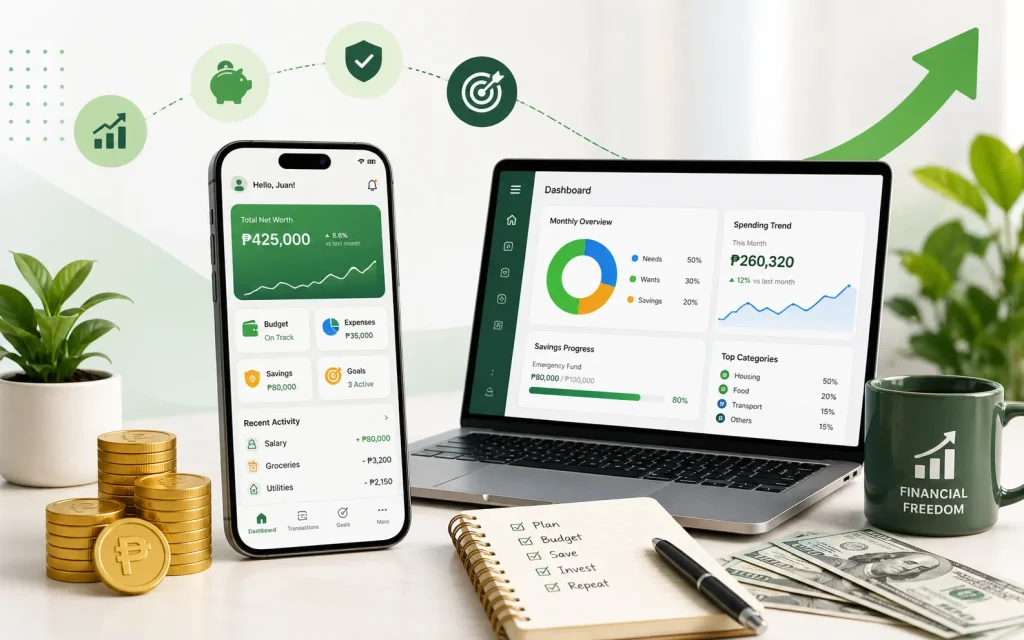
Built by a former OFW with 12+ years abroad · Practical guides, real experience · For Filipinos anywhere in the world
Disclaimer: The content on this website is not intended as financial, investment, legal, or professional advice.
Any action you take based on the information you find on this website is strictly at your own risk. We strongly recommend consulting with a qualified financial advisor or professional before making any financial decisions.
The PeraMatters Promise
We get it. You didn’t leave home just to stay broke in a different zip code. Whether you’re an OFW burning the midnight oil abroad, a digital nomad chasing clients and sunsets, or a freelancer building your empire from your childhood bedroom—we simplify the money stuff so you can focus on living.
Bite-Sized Clarity: No jargon. No judgment. Just clear answers.
Boundary-First Approach: Learn how to build wealth without breaking yourself as the family breadwinner.
Borderless Strategy: Tax guides, investment how-tos, and banking setups for the location-independent Filipino.

Start Here: What's Your Journey?
Personal Finance Budgeting, saving, emergency funds, and money mindset for real life.
Banking Digital banks, OFW accounts, remittance comparisons, and multi‑currency setups.
Investing Index funds, MP2, stocks, crypto, and how to start with just ₱1,000.
Wealth Building Passive income, real estate, FIRE, and long‑term net worth strategies.
Debt & Credit Credit cards, loans, debt snowball vs. avalanche, and escaping the utang trap.
Insurance Life, health, HMO, travel, and international medical cover explained honestly.
Business Freelancing, registering your venture, scaling, and separating personal/biz money.
Taxes ITR filing, BIR registration for freelancers, OFW tax exemptions, and nomad residency.
News & Trends OFW policy updates, fintech launches, economic changes, and what they mean for your wallet.

Meet the author
Kenneth Louie is the founder of PeraMatters.com, a Filipino finance blog focused on money management, digital income, and practical financial decisions.
He is an ECE graduate from Ateneo de Davao University and spent over 12 years as an OFW, gaining real-life experience in handling finances and responsibilities.
Now a digital nomad in Asia, Kenneth works as an SEO Affiliate marketer, building income through online content and search engine optimization.
Through PeraMatters.com, he shares practical money tips, OFW lessons, and strategies to help Filipinos earn smarter and achieve financial freedom. Read More
Free Tools & Downloads
Sweldo‑to‑Wealth Budget Tool
Exactly how much of your income goes to needs, wants, and the emergency fund you’ve been putting off.
Download Now
Ultimate Remittance Cheat Sheet
Compare Wise, Remitly, bank wires, and more. Fees, hidden forex, and speed—all in one PDF.
Get the Cheat Sheet
Pre‑Flight Nomad Checklist
Banking, taxes, and insurance tasks to lock down before you board that plane.
Grab the Checklist
Why PeraMatters Is Different From Typical Money Advice
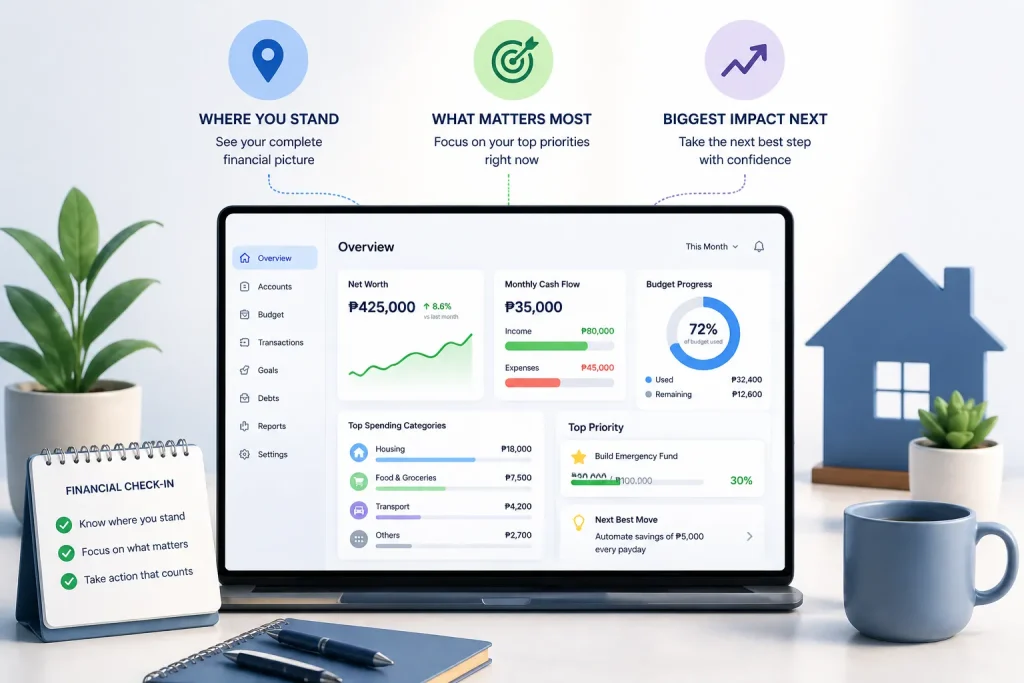
1. Clarity-first: See your full picture at a glance
You can’t optimize your finances if you don’t understand where your money is going. PeraMatters gives you an honest, non-judgmental view of your cash flow, obligations, and opportunities—so you can make decisions based on reality, not assumptions.
2. Behavior-focused, not just numbers-focused
Real progress comes from habits. You’ll find realistic budgeting and saving strategies that fit your lifestyle while gently guiding you toward better choices—without burnout.
3. Built for beginners and re-starters
Whether you’re just starting or rebuilding after a setback, PeraMatters provides simple, step-by-step guidance that makes managing money feel achievable.
Core PeraMatters Solutions to Improve Your Financial Health
PeraMatters is built around a few powerful pillars that work together to help you improve your financial situation in a way that fits your life.
- Smart money mapping: Know exactly where you stand
- Guided budgeting: Flexible systems you can actually stick to
- Purpose-driven saving and debt strategies: Goals that build on each other
How PeraMatters Works in 4 Simple Steps
To remove friction and help you take action quickly, PeraMatters follows a simple and repeatable process:
Step 1: Get clear on your current money picture
Step 2: Choose your first high-impact goal
Step 3: Apply focused budgeting and saving strategies
Step 4: Review, adjust, and level up
Proof That This Approach Works
PeraMatters is built on a simple principle: small, consistent changes beat big, unsustainable efforts. This approach is grounded in behavioral finance—focusing on realistic, repeatable actions that actually stick.
Who PeraMatters Is Perfect For
PeraMatters is ideal if you want to move from confusion to clarity—without unnecessary complexity.
- You feel stuck and want a simple way to move forward
- You want practical tools, not overwhelming spreadsheets
- You’re looking for real-world financial guidance, not hype
- You’re a beginner or someone ready for a fresh start
FAQ
What is the 50/30/20 budgeting rule?
It’s a simple framework where 50% of your after-tax income goes to needs, 30% to wants, and 20% to savings and debt repayment.
How much emergency fund do I really need?
Ideally, 3 to 6 months’ worth of living expenses. If you’re a freelancer, digital nomad, or OFW with dependents, aim for 6 to 12 months for greater security.
I have irregular income. How do I budget?
Calculate your baseline monthly expenses. When you earn, “pay yourself” a fixed salary into your checking account first, and park the surplus in a separate buffer account to cover lean months.
How do I decide between the Debt Snowball and Debt Avalanche methods?
Snowball (paying the smallest debt first) gives psychological wins. Avalanche (paying the highest interest rate first) saves the most money mathematically. Choose based on what will keep you motivated.
Is it okay to use a loan to invest?
This is extremely high risk. Only consider it if the after-tax investment return is guaranteed to be higher than the loan’s interest rate, which is almost never the case for consumer loans. Not recommended for beginners.
What’s the difference between a stock, a bond, and a mutual fund?
A stock is a share of company ownership. A bond is a loan to a company or government. A mutual fund or ETF is a basket of many stocks and/or bonds, offering instant diversification.
I’m a complete beginner. Where should I invest my first ₱1,000 or $100?
Start with a low-cost, diversified index fund or ETF that tracks the broad market (like the S&P 500 or a global index). The key is to start and be consistent.
What is Compound Interest and why is it so important?
It’s earning returns on your returns. Over long periods, this creates a snowball effect, and time is the single most critical factor. Start as early as possible.
Should I save in PHP or my host country’s currency?
Diversify. Keep an emergency fund in PHP for immediate family needs and another in your host country’s currency (e.g., AED, USD, SGD) for your own security. Don’t convert everything just because the exchange rate is high; invest in the currency you’ll eventually spend.
What is the best way to send money home?
Don’t just use the first remittance center you see. Compare bank wire fees, specialist OFW remittance apps (like Wise, Remitly), and digital bank transfers. A difference of a few cents in the exchange rate on thousands of dollars adds up substantially over a year.
I keep getting offers for “OFW-exclusive” investment plans. Are they good?
Be skeptical. “Exclusive” is often a marketing tactic. Always check if the seller and product are regulated by the SEC, BSP, or Insurance Commission. Compare the net returns, fees, and lock-in periods to a basic, self-managed diversified fund.
Is buying a property back home always my best first investment?
Not necessarily. Real estate is concentrated, illiquid, and requires management. A house is a goal, but first build a liquid investment portfolio for flexibility. Do not buy a lot you’ve never seen from an agent you’ve only met online.
How do I secure my Pag-IBIG MP2 savings when I’m abroad?
You can open and manage your MP2 account entirely online via the Virtual Pag-IBIG portal. You can fund it through international remittance partners, online banking, or over-the-counter at local payment centers.
I’m an OFW. Am I required to pay taxes in the Philippines?
Yes, OFWs are generally exempt from income tax on salary earned abroad. However, you are not exempt on income earned from Philippine sources (e.g., rental income from a condo you leased out, business revenue in the Philippines). You must file an ITR for that local income.
My company provides life insurance. Should I still get my own?
Yes. Your company-provided policy often ends when your employment does. A personal policy is a permanent safety net for your family. Consider a term life insurance plan for the purest, most affordable coverage.
What insurance is a non-negotiable for an OFW?
A comprehensive HMO/health insurance for your family in the Philippines and a personal life insurance policy. The government-mandated OWWA coverage is basic; treat it as your last-resort safety net, not your primary plan.
I move every few months. What’s the best banking setup?
A layered system: (1) A home country bank for base savings and local payments, (2) a global-friendly digital bank (like Wise, Revolut) for multi-currency spending and the best exchange rates, and (3) a backup travel-friendly card for ATM withdrawals.
How do digital nomads pay taxes? It’s so confusing!
First, determine tax residency. You’re usually a tax resident where you spend 183+ days a year. If you perpetually travel without a base, your home country may still claim you. You need a specialized cross-border accountant. The FEIE (Foreign Earned Income Exclusion) applies to US citizens; other nationalities have different rules and you almost always owe tax somewhere.
I’m a Filipino digital nomad. Do I need to file business permits even if my clients are all abroad?
Yes. If you are living and working in the Philippines, you are a self-employed professional who must register as such with the BIR and your LGU. Your income is exempt from VAT on service exports, but it is subject to income tax.
What’s the first financial thing to do when I arrive in a new country?
Know how you’ll access cash and notify your banks of your travel. Also, know the cost of an emergency flight out. Have a “break glass in case of emergency” fund that can buy a last-minute ticket from anywhere to your home country.
Should I get travel insurance or international health insurance?
For short trips (under 90 days), travel insurance is fine. For a true nomadic lifestyle, you need a comprehensive international health insurance plan, which is more expensive but covers pre-existing conditions, routine check-ups, and cancer care globally.
How do I save for retirement with no employer 401(k) or SSS as an OFW?
You must build your own “pension.” If you’re a Filipino, voluntarily continue your SSS contributions (as a self-employed member) for the minimum pension. Then, set up a separate, automated monthly investment into a global, diversified portfolio of low-cost ETFs.
What is the FIRE movement?
Financial Independence, Retire Early. It’s a lifestyle focused on a high savings rate and frugal living to achieve specific financial freedom metrics (like saving 25x your annual expenses).
I just got a huge raise. How do I avoid lifestyle creep?
Acknowledge the raise, allocate a defined percentage (e.g., 20%) to spend on enjoying your life now, and immediately automate a much larger percentage (50-80%) to savings and investments. You still feel the reward without sabotaging your future.
How do I talk to my family about money without causing conflict when I’m the breadwinner?
Move from an unspoken “open-door” policy to a structured budget. Communicate a clear “I can commit to sending X amount per month for family support, but other surprise requests will need to wait.” This sets boundaries without guilt.
How do I say “no” when a relative asks for a loan?
A script: “All my extra cash is tied up in investments I can’t easily pull out right now. I wish I could help, but I’m not in a position to lend money.” This depersonalizes it and removes the dynamic of you having liquid cash sitting idly.
Should my partner and I combine our finances while we travel full-time?
There’s no single right answer. A “Yours, Mine, and Ours” approach is popular. You each maintain an independent account for personal spending and contribute a proportional amount to a joint account for all shared travel and living expenses.
PeraMatters.com provides honest, jargon-free personal finance guides for OFWs, digital nomads, and Filipino breadwinners. Founded by a former OFW with 12+ years abroad. Covers budgeting, remittances, MP2 investing, taxes, insurance, and debt. Education only, not financial advice.
