


Why OFW Remittances Are Still the Philippines Economic Lifeline Key Takeaways
Why OFW remittances are still the Philippines economic lifeline because they provide a stable, dollar-denominated income stream that directly supports household consumption, shores up foreign currency reserves, and acts as a counter-cyclical buffer during global economic downturns.
- OFW remittances economic lifeline status is underscored by their consistent contribution to Philippine GDP — even during the pandemic, remittance inflows barely dipped.
- Household consumption, which makes up about 70 percent of the economy, relies heavily on the spending power of remittance-supported families.
- Global economic shocks often reinforce, rather than weaken, the remittance channel as more Filipinos seek overseas employment when local opportunities shrink.
Why OFW Remittances Remain the Core of Philippine Economic Stability
The numbers tell an unmistakable story. In 2023, personal remittances from overseas Filipinos reached a record high of $37.2 billion, according to the Bangko Sentral ng Pilipinas (BSP). That figure represents OFW remittances economic lifeline in its clearest form: a massive, reliable dollar inflow that keeps the national economy afloat when other revenue streams — such as exports or foreign direct investment — falter. The Philippine economy dependency on remittances is not a sign of weakness but a structural feature that has proven resilient through multiple crises, from the 1997 Asian Financial Crisis to the COVID-19 pandemic. For a related guide, see OFW Remittances Hit Record High in 2026.
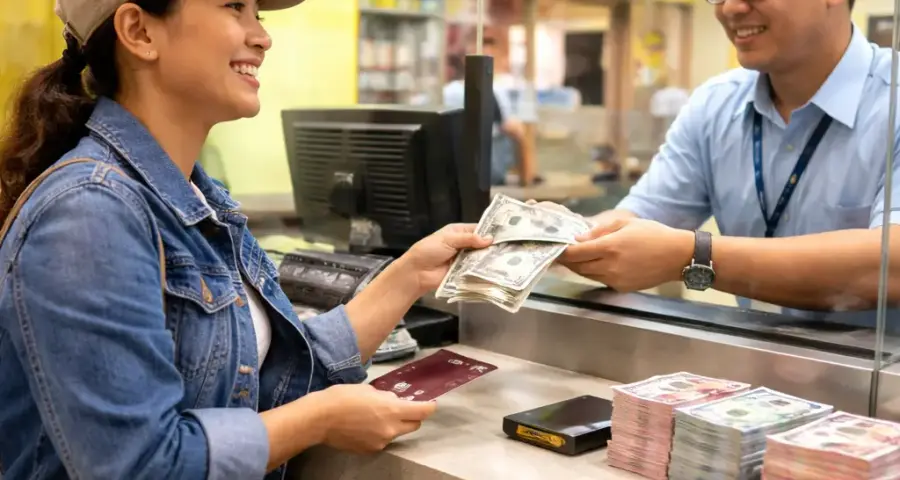
For context, no single export product or sector generates as much foreign exchange as the collective work of the 10 million overseas Filipinos spread across every continent. Their overseas Filipino worker contributions go far beyond the cash sent home; they create a direct link between global labor markets and local Filipino livelihoods. This is remittance driven economic growth Philippines in action — money that flows straight into sari-sari stores, tuition fees, hospital bills, and home construction projects. For a related guide, see 10 Insurance Mistakes That Cost Filipinos Thousands.
How Important Are OFW Remittances to the Philippine Economy?
To measure importance, look at three key indicators. First, remittances consistently account for roughly 9–10 percent of the country’s GDP, a ratio that places the Philippines among the most remittance-dependent economies in the world, alongside Nepal and El Salvador. Second, household consumption remittances directly fund about one-fifth of all Philippine household spending. Third, the dollar inflow shores up the peso and bolsters the country’s gross international reserves, providing a cushion against external shocks. Without this flow, the peso would likely weaken more sharply against the dollar, and government bond ratings could be downgraded.

What Role Do Remittances Play in Supporting Filipino Families?
For approximately 12 million Filipino households — or roughly one in every three families — a relative working overseas is the primary breadwinner. These families use the money for daily living expenses, children’s education, medical care, and savings. The overseas Filipino worker contributions often mean the difference between subsistence and a middle-class lifestyle. It is not uncommon to see a single remittance fund a sibling’s college degree, a parent’s kidney dialysis, or the purchase of a modest family home. The social multiplier effect is enormous: when one OFW family can spend more, the local tricycle driver, rice vendor, and hardware store owner all benefit.

Do OFW Remittances Drive National Economic Growth?
The direct answer is yes, but the mechanism deserves careful explanation. Unlike foreign direct investment (FDI), which builds factories and hires workers, remittances flow directly into the hands of consumers. Household consumption remittances account for about 70 percent of GDP spending in the Philippines, so any increase in consumer purchasing power has an outsized impact on economic output. Moreover, remittances have a multiplier effect. Every dollar sent home circulates through the economy multiple times — spent at the market, paid to a school, used to buy construction materials, or deposited in a rural bank that then lends it to local entrepreneurs.
Remittance driven economic growth Philippines also shows up in the balance of payments. The BSP reports that remittances cover about half of the country’s trade deficit, meaning the dollars OFWs send home effectively pay for imports of oil, machinery, and consumer goods that the domestic economy needs. This cushion allows the Philippines to import more without triggering a balance-of-payments crisis.
Why Does the Philippines Depend Heavily on Overseas Workers?
The roots of this dependency run deep. The OFW labor migration history began in earnest in the 1970s when President Ferdinand Marcos implemented the Labor Export Policy to ease domestic unemployment and earn foreign currency. Over the decades, overseas employment programs Philippines evolved into an institutional ecosystem — the Philippine Overseas Employment Administration (POEA), now part of the Department of Migrant Workers, oversees licensing, training, and deployment of millions of workers annually.
Several structural factors perpetuate this dependency. The domestic economy cannot create enough formal-sector jobs for the million-plus young Filipinos entering the workforce each year. Wages in key sectors like education, healthcare, and manufacturing are far lower than comparable roles abroad. And once a migration network is established — families see neighbors build houses, send children to good schools, and retire with savings — the aspiration to work overseas becomes culturally embedded. This is not a choice made out of desperation alone; it is a rational economic strategy for millions of households.
What Would Happen to the Philippines Without OFW Remittances?
Scenario analysis paints a sobering picture. A sudden cessation of remittance inflows would trigger an immediate 10 percent contraction in GDP. The peso would depreciate sharply, raising the cost of imports and stoking inflation and remittance stability issues — precisely the scenario the BSP tries to avoid. Household consumption would collapse, especially in provinces heavily dependent on remittances, such as Ilocos, Pangasinan, and parts of the Visayas. Bank non-performing loans would spike, and the government would face a steep drop in tax revenues from consumption taxes. The social fabric would tear as families lost their primary income source, potentially forcing children out of school and delaying medical treatment.
The reality is less dramatic but still meaningful. Even a 10 percent decline in remittance inflows — as happened briefly during the worst of the pandemic in Q2 2020 — causes noticeable stress. The BSP’s monetary policy often has to accommodate shocks by adjusting interest rates to prevent a slide in consumption. The economic stability remittance inflow provides is why policymakers treat every OFW as a national asset and why the government regularly deploys crisis-response programs, such as repatriation flights and free legal aid, to protect overseas workers.
How Do Remittances Impact Consumption and Spending in the Philippines?
Because consumption driven economy Philippines relies heavily on household spending, remittances are the primary fuel. Data from the BSP shows that around 85 percent of remittance receipts are spent on immediate needs — food, housing, utilities, transportation, education, and healthcare. Only about 15 percent goes into savings or investments. This high propensity to consume means that any change in remittance flows has an immediate, accelerating effect on aggregate demand. When OFWs send more, grocery stores, schools, hospitals, and construction firms see a direct boost.
Which Sectors Benefit Most from OFW Money Flow?
Several sectors are disproportionately dependent on remittance spending. Real estate tops the list, as many OFWs buy land or condominium units as long-term investments or to build a family home. The real estate and remittance spending connection is so strong that developers such as Ayala Land, SM Prime, and Vista Land specifically market projects to overseas buyers. The educational sector also benefits heavily via education funding from OFWs. Private schools, especially in Metro Manila and provincial capitals, enroll large numbers of children from OFW-dependent families.
Healthcare is another major channel. Healthcare spending remittances cover everything from annual checkups to expensive surgeries. Many OFWs enroll their parents in HMO plans or pay hospital bills directly from abroad. Retail — both sari-sari stores and large shopping malls — sees a steady stream of cash from remittance recipients. Even service sector growth Philippines, including restaurants, transport, and entertainment, is sustained by this spending.
Are Remittances Stable During Global Economic Crises?
Surprisingly, remittances have proven more stable than many other capital flows during crises. The BSP documentation on migrant worker remittance trends shows that even during the 2008 global financial crisis, when exports and FDI fell sharply, remittance inflows dipped only modestly and recovered within a year. The same pattern repeated during the COVID-19 pandemic. The reason is structural: when the Philippine economy weakens, more families are motivated to seek work abroad, increasing the number of OFWs even if average remittance per worker falls temporarily.
This counter-cyclical nature is what gives economic crisis resilience Philippines its foundation. The global Filipino workforce expands during recessions as unemployment at home rises, providing a natural hedge. The government’s overseas employment programs Philippines often ramp up during downturns, actively deploying workers to countries still hiring — such as Japan, Canada, and the Middle East. This flexibility makes economic resilience through OFWs a deliberate policy, not merely a byproduct of labor migration.
What Policies Support OFW Contributions to the Economy?
The Philippine government has institutionalized support for OFWs through several policy pillars. RA 8042, the Migrant Workers and Overseas Filipinos Act of 1995, and its subsequent amendments, provide a legal framework for protecting workers abroad. The Department of Migrant Workers, established in 2022, consolidates services for pre-employment, on-site welfare, and reintegration. Bangko Sentral remittance reports show that policies promoting formal channels — such as reduced bank fees and mobile-money partnerships with GCash and PayMaya — have successfully shifted more remittances into the banking system, improving data accuracy and reducing leakage.
Fiscal policies also matter. The government exempts OFWs from paying income tax on earnings abroad, and the BSP’s dollar remittance inflow Philippines monitoring helps calibrate monetary policy. The government also offers reintegration loans and livelihood training through agencies like the Overseas Workers Welfare Administration (OWWA). These overseas Filipino worker contributions are recognized in the national budget through allocations for migrant worker centers in host countries and emergency repatriation funds. For a related guide, see Best Countries Where OFWs Earn the Highest Remittance Value.
Key Economic Indicators: The Remittance-GDP Link
For readers seeking concrete data, the table below summarizes how Philippine GDP remittance contribution has evolved over the past five years, using figures from the BSP and the Philippine Statistics Authority.
| Year | Total Remittances (USD Billions) | Remittances as % of GDP | GDP Growth Rate (%) |
|---|---|---|---|
| 2019 | $33.5 | 9.2% | 6.1% |
| 2020 | $33.2 | 9.6% | -9.5% |
| 2021 | $34.9 | 9.2% | 5.7% |
| 2022 | $36.1 | 9.1% | 7.6% |
| 2023 | $37.2 | 8.9% | 5.6% |
As the table shows, even during the pandemic year of 2020, remittances held steady relative to GDP, while the overall economy contracted sharply. This resilience is the hallmark of the financial inflow from overseas workers. The slight decline in percentage terms in 2023 reflects faster growth in other GDP components, not a drop in remittances. In absolute terms, the figure continues to climb, supporting foreign currency reserves Philippines at a healthy level of over $100 billion as of mid-2024.
Challenges and Risks to the Remittance-Driven Model
No system is without vulnerabilities. The labor export economy Philippines model faces several headwinds. First, global geopolitical tensions — such as conflicts in the Middle East, where many OFWs work — can disrupt deployment and cause repatriation. Second, automation and artificial intelligence threaten many service-sector jobs that OFWs fill, such as call center agents, administrative assistants, and even some nursing roles. Third, the Philippine economy’s family income dependency remittances creates a moral hazard: local industries may become less competitive because workers can rely on remittance income rather than demanding higher domestic wages.
There is also the inflation and remittance stability paradox. When the peso weakens, remittance recipients get more pesos per dollar, which increases household spending power but also raises the cost of imported goods. This can fuel inflation, eroding the purchasing power of non-OFW households. The BSP must carefully manage interest rates to balance these competing pressures.
Can the Philippines Reduce Its Reliance on OFW Remittances?
This is the central policy question. The Philippines has made progress in diversifying its economy through the growth of the BPO sector, manufacturing, and tourism. However, these sectors still cannot absorb the 1.5 million new labor market entrants each year. OFW labor migration history suggests that a meaningful shift away from remittance dependency would require decades of sustained investment in education, infrastructure, and industrial policy. In the near term, the goal is not to eliminate dependency but to make it less volatile — by expanding OFW access to formal savings and investment products, improving financial literacy, and creating better reintegration programs for returning workers.
For Filipino families, the lesson is pragmatic. Remittances are a powerful tool for upward mobility, but they are not a guaranteed safety net. Families should budget carefully, prioritize savings, and invest in skills that will make them employable even if the overseas job market changes. For policymakers, the focus should remain on protecting OFWs abroad, reducing remittance transfer costs, and building a domestic economy that can eventually stand on its own.
Useful Resources
For readers who want to explore the data and policy context behind these insights, the following resources are authoritative and regularly updated:
- Bangko Sentral ng Pilipinas Official Remittance Statistics — The BSP publishes monthly and annual reports on personal remittance flows, including breakdowns by country source and type of transfer. This is the primary source for any data-driven analysis of cash inflows from migrant workers.
- Department of Migrant Workers (DMW) Official Portal — The DMW manages the regulatory and welfare framework for OFWs. The site provides information on program guidelines, repatriation assistance, and reintegration support services that directly affect the global Filipino workforce contribution to the Philippine economy.
Frequently Asked Questions About Why OFW Remittances Are Still the Philippines Economic Lifeline
Why are OFW remittances still the Philippines economic lifeline?
OFW remittances provide a stable, dollar-denominated cash flow that accounts for about 9–10 percent of Philippine GDP and directly supports household consumption, which makes up 70 percent of the economy. No domestic sector generates as much foreign exchange on a sustained basis.
How important are OFW remittances to the Philippine economy?
They are critical. Remittances are the single largest source of foreign currency inflows, larger than the BPO sector, tourism, and manufactured exports combined. They stabilize the peso, support foreign reserves, and fund a significant portion of the country’s trade deficit.
What role do remittances play in supporting Filipino families?
For about 12 million households, remittances cover daily expenses, education, healthcare, and housing. They enable families to afford better nutrition, private schooling, and medical treatment, often lifting them from poverty into the middle class.
How do OFW remittances affect national economic growth?
Remittances boost GDP directly through consumption and indirectly through their multiplier effect — every dollar spent circulates multiple times across retail, real estate, education, and healthcare. They also provide a stable source of U.S. dollars that helps maintain overall economic confidence.
Why does the Philippines depend heavily on overseas workers?
Historical labor export policies, domestic job shortages, large wage differentials, and strong social networks all contribute. The economy cannot generate enough formal jobs for the million-plus new workers each year, making overseas work a rational strategy for millions.
What would happen to the Philippines without OFW remittances?
GDP would contract by an estimated 10 percent, the peso would weaken sharply, household consumption would collapse, government tax revenues would fall, and poverty rates would spike significantly.
How do remittances impact consumption and spending in the Philippines?
Approximately 85 percent of remittance receipts are spent on immediate needs — food, housing, utilities, education, and healthcare. This spending generates jobs and income for local businesses, especially in retail, real estate, and services.
Which sectors benefit most from OFW money flow?
Real estate receives the largest share from home purchases and construction. Education, healthcare, and retail also benefit significantly. Private schools, hospitals, and sari-sari stores all depend on the steady spending of OFW-supported families.
How stable are remittances during global economic crises?
Remittances have proven counter-cyclical — they tend to hold steady or even increase during global downturns because more Filipinos seek work abroad when local opportunities shrink. They are far more stable than foreign direct investment or portfolio capital flows.
What policies support OFW contributions to the economy?
Key policies include the Migrant Workers Act, the creation of the Department of Migrant Workers, tax exemptions on foreign-earned income, BSP initiatives to reduce remittance costs, and OWWA reintegration programs that provide loans and livelihood training.
What exactly are OFW remittances?
They are the money that overseas Filipino workers send back to their families in the Philippines. These transfers include cash sent through banks, money transfer companies, or digital wallets, as well as goods and personal transfers.
How much money do OFWs send home each year?
In 2023, total personal remittances reached a record $37.2 billion, according to the BSP. The amount has been steadily increasing each year, driven by growth in the number of deployed workers and higher average earnings.
Where do most OFW remittances come from?
The largest sources are the United States, the United Arab Emirates, Saudi Arabia, Japan, and Singapore. The United States, in particular, accounts for about 40 percent of total remittance inflows, reflecting the large Filipino diaspora there.
How do remittances affect the Philippine peso?
Consistent dollar inflows from remittances help support the peso’s value. Without them, the peso would likely depreciate further against major currencies, making imports more expensive and driving up inflation.
Are remittances taxed in the Philippines?
No, the income that OFWs earn abroad is not subject to Philippine income tax. However, the goods and services they purchase with that money are subject to the standard value-added tax (VAT) and other consumption taxes.
How does the government track remittance data?
The BSP compiles data from banks, money transfer operators, and surveys. The data is reported monthly and quarterly, providing a detailed picture of dollar remittance inflow Philippines trends by source and channel.
Can remittances help during personal financial emergencies?
Yes, because remittances often arrive quickly through digital channels, they serve as a vital safety net for medical emergencies, job loss, or natural disasters in the Philippines. Many OFW families rely on this immediate cash availability.
What percentage of OFW income is saved?
Studies suggest about 15–20 percent of remittance receipts are used for savings or investments. The rest is spent on consumption. Government programs aim to increase this savings rate through financial literacy campaigns and alternative investment products.
How do remittances affect inequality in the Philippines?
Remittances can reduce absolute poverty among recipient families, but they may also widen income gaps between OFW households and those without a migrant worker. The net effect on overall inequality remains a subject of academic and policy debate.
What is the future outlook for OFW remittances?
In the near term, continued growth is likely due to demographic pressures and expanding overseas job markets. Over the long term, automation, geopolitical shifts, and economic diversification may reduce dependency, but remittances will remain a central feature of the Philippine economy for at least another decade.