

Credit Card very smart Tips to Protect Your Finances Key Takeaways
Using a credit card wisely is one of the most powerful ways to build credit, earn rewards, and safeguard your finances—but only if you avoid common pitfalls.
- Smart credit card tips for beginners start with understanding your credit limit and never spending more than you can pay off each month.
- To protect finances using credit cards , always pay on time, keep your utilization low, and review statements monthly for errors or fraud.
- Long-term success comes from building habits like automating payments, using rewards wisely, and tracking your spending regularly.
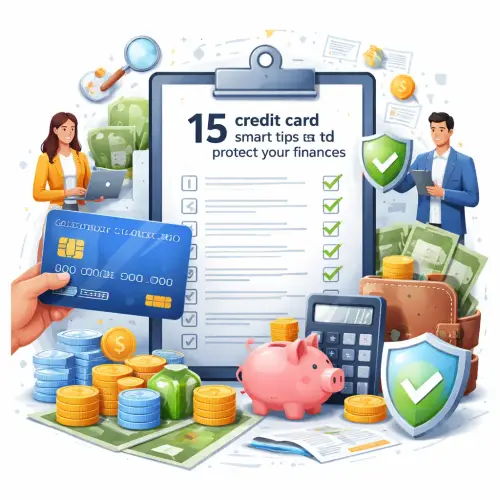
How to Apply These Credit Card very smart Tips to Protect Your Finances in Real Life
Many people get a credit card without a clear plan. They swipe, tap, or click without thinking about the consequences. Before you know it, interest piles up, fees eat into your budget, and your credit score takes a hit. That is exactly why we put together this list of smart credit card tips for beginners and experienced users alike. Each tip below is designed to help you make better decisions, avoid common traps, and use plastic as a tool—not a burden. For a related guide, see 7 Credit Mistakes You Should Avoid at All Costs.
Who This Guide Is For
This is for college students getting their first card, young professionals building credit, freelancers managing irregular income, small business owners separating business from personal spending, and anyone who has ever felt confused by interest rates or late fees. If you want to protect finances using credit cards instead of letting them control you, keep reading.
Tip #1: Always Pay Your Balance in Full—The Gold Standard
The single most effective way to use credit cards without interest is to pay your entire statement balance by the due date. When you do this, you enjoy an interest-free grace period of roughly 21 to 25 days. Miss that window, and interest starts accruing on the entire balance—not just the unpaid portion. This is one of the most important best practices for paying credit card bills.
How to Make It Automatic
Set up autopay for the full statement balance. If your income is variable, set a calendar reminder three days before the due date and manually pay the full amount. This habit is foundational for anyone seeking habits for financial discipline with credit cards.
Tip #2: Keep Your Credit Utilization Below 30%
Credit utilization importance cannot be overstated. This ratio—what you owe divided by your total credit limit—accounts for roughly 30% of your FICO score. Experts recommend using no more than 30% of your available credit at any given time. Better yet, aim for under 10% if you want to maximize your score. If you have a $10,000 limit, keep your balance below $1,000–$3,000. This is a core strategy to improve credit score with credit cards.
Practical Ways to Lower Utilization
- Request a credit limit increase (without changing your spending).
- Pay down your balance before the statement closing date.
- Spread charges across multiple cards to keep individual ratios low.
Tip #3: Set Spending Boundaries—Your Budget Is Your Shield
Before you use a credit card, decide exactly how much you will charge. Treat it like a debit card linked to your checking account. When you track credit card spending effectively, you catch overspending early. Use budgeting apps like YNAB, Mint, or even a simple spreadsheet. This is one of the most reliable smart credit card tips for beginners who want to avoid debt.
Tip #4: Choose the Right Card for Your Lifestyle
Not all cards are created equal. A cash-back card may suit a freelancer who needs simple rewards, while a travel card works better for someone who flies frequently. Look for cards with no annual fee if you are just starting out. Compare APR ranges, reward structures, and sign-up bonuses. This careful selection helps you use rewards credit cards safely.
Key Features to Compare
| Feature | Best For | Watch Out For |
|---|---|---|
| No annual fee | Beginners, low spenders | Higher APR sometimes |
| Cash back (flat 2%) | Everyday purchases | Category caps |
| Travel miles | Frequent travelers | Blackout dates |
| Low introductory APR | Large planned purchases | Rate jumps after promo |
Tip #5: Monitor Your Statements for Fraud
How do I avoid credit card fraud? By checking your statements every month—or better yet, every week. Sign up for transaction alerts via text or email. If you see a charge you don’t recognize, report it immediately. Most issuers offer zero fraud liability if you act fast. This is the safest way to use a credit card in the digital age.
Five Red Flags to Watch For
- Small test charges (e.g., $0.50 from an unknown merchant).
- Charges from cities you haven’t visited.
- Duplicate charges for the same transaction.
- Sudden changes in your credit limit or account details.
- Emails or texts asking for your full card number.
Tip #6: Never, Ever Miss a Payment
Your payment history is the biggest factor in your credit score—35%. One missed payment can drop your score by 50 to 100 points. If you are thinking about avoid credit card debt traps, this is the most important rule to follow. Set up minimum autopay as a safety net, even if you plan to pay manually later.
Tip #7: Avoid Cash Advances Like the Plague
Cash advances come with sky-high interest rates (often 25%+), no grace period, and an upfront fee of 3% to 5% of the amount. They are one of the most dangerous common credit card mistakes to avoid. If you need cash, use a debit card or a personal loan with a lower rate.
Tip #8: Pay More Than Once a Month
If you carry a balance, paying biweekly or even weekly can reduce your average daily balance and lower interest charges. It also helps you track credit card spending effectively. This technique is especially useful for freelancers who get paid irregularly.
Tip #9: Understand Your Card’s Billing Cycle
Your statement closing date and due date are different. The closing date is when the issuer reports your balance to credit bureaus. If you pay down your balance right before that date, you can report a low utilization. This is an advanced trick to improve credit score with credit cards quickly.
Tip #10: Use Rewards Without Changing Your Spending
How do rewards credit cards work safely? Simple: earn rewards on purchases you would make anyway—groceries, gas, bills. Never buy something just to get points. That is how people fall into debt. Treat rewards as a bonus, not a goal. This mindset is central to habits for financial discipline with credit cards.
Tip #11: Keep Your Oldest Cards Open
Length of credit history matters for your score. Don’t close your oldest card, even if you no longer use it. Instead, put one small recurring charge on it (like Netflix) and set autopay. This helps you manage multiple credit cards wisely without hurting your credit age.
Tip #12: Create an Emergency Payoff Plan
If you ever find yourself in debt, prioritize the card with the highest APR first (the avalanche method). Or pay off the smallest balance first (the snowball method) for a psychological win. Both strategies help you avoid credit card debt traps and regain control. Include a timeline and a monthly budget for extra payments.
Tip #13: Freeze Your Card in Your Wallet—Literally
Put your physical card in a glass of water and freeze it. When you want to make an impulse purchase, you have to wait for it to thaw. That pause gives you time to ask: “Do I really need this?” It is a quirky but effective way to build habits for financial discipline with credit cards.
Tip #14: Limit the Number of Cards You Carry
Carrying five cards in your wallet tempts you to overspend. Keep one or two with you—a primary everyday card and a backup. Store the rest at home. This is a safe approach to manage multiple credit cards wisely and reduces the risk of losing all of them.
Tip #15: Reassess Your Credit Card Strategy Annually
Your financial life changes. A card that made sense two years ago might now charge high fees or have weak rewards. Once a year, review your statements, call your issuer to ask for a lower APR or a fee waiver, and consider switching to a card that better fits your current needs. This habit delivers long-term benefits of responsible credit card use.
Useful Resources
For more on credit scoring basics, visit the MyFICO Credit Education Center. To check your credit report for free, go to AnnualCreditReport.com.
Final thought: These 15 strategies are not just tips—they are a roadmap to financial independence. By applying these credit card very smart tips to protect your finances, you will build strong credit, avoid costly mistakes, and enjoy the benefits of plastic without the stress. Start with one tip today, add another next week, and watch your financial confidence grow.
Frequently Asked Questions About Credit Card very smart Tips to Protect Your Finances
What are smart credit card tips for beginners ?
Start with a no-annual-fee card, pay the full balance every month, set up autopay for at least the minimum, and never spend more than you can afford. These smart credit card tips for beginners build a solid foundation.
How can I protect my finances using credit cards?
Use your card like a debit card, pay in full each month, keep utilization under 30%, monitor statements for fraud, and avoid cash advances. These actions protect finances using credit cards by preventing debt and fees.
How do I avoid credit card debt traps ?
Avoid making only the minimum payment, never take cash advances, keep spending within your budget, and pay off your balance as soon as possible. These strategies help you avoid credit card debt traps.
What is the safest way to use a credit card ?
The safest way to use a credit card is to treat it like a payment tool—not a loan. Pay the full balance monthly, enable transaction alerts, and never share your card details over email or phone.
How can I improve credit score with credit cards ?
Pay on time every single month, keep utilization under 10% if possible, maintain old accounts, and only apply for new cards when necessary. This consistent behavior helps improve credit score with credit cards.
Why is credit utilization important?
Credit utilization importance comes from its 30% weight in FICO scoring. High utilization signals risk, while low utilization shows you manage credit responsibly. Keep it under 30% for best results.
How do I avoid credit card fraud ?
To avoid credit card fraud, never click links in unsolicited emails, use virtual card numbers for online shopping, keep your physical card secure, and check your statements weekly. Report suspicious charges immediately.
What are best practices for paying credit card bills ?
The best practices for paying credit card bills include paying the full statement balance by the due date, setting autopay as a backup, and reviewing your statement before paying. Avoid paying only the minimum.
How can I use credit cards without paying interest?
To use credit cards without paying interest, always pay your statement balance in full before the due date. This keeps you in the grace period where no interest accrues. Never carry a balance month to month.
What habits build strong financial discipline with credit cards?
Habits for financial discipline with credit cards include tracking every purchase, reviewing statements weekly, freezing the card for impulse control, and sticking to a predefined budget. Consistency is everything.
How do rewards credit cards work safely?
To use rewards credit cards safely, earn points or cash back on normal purchases you already budget for. Never buy extra items just for points, and pay the balance in full every month to avoid interest eroding your rewards.
What are common credit card mistakes to avoid ?
Common credit card mistakes to avoid include paying only the minimum, taking cash advances, missing payments, maxing out your limit, and applying for too many cards at once. These errors damage your score and cost you money.
How can I manage multiple credit cards wisely ?
To manage multiple credit cards wisely, create a system: use a primary card for daily spending, keep others for specific categories, set up autopay for all minimums, and check your dashboard once a week. A spreadsheet or app helps.
How do I track credit card spending effectively ?
Track credit card spending effectively by using your issuer’s app, setting spending alerts, categorizing expenses in a budgeting tool, and reviewing your account every few days. Catching overspending early prevents debt.
What are long-term benefits of responsible credit card use ?
The long-term benefits of responsible credit card use include a high credit score, lower interest rates on loans and mortgages, lucrative travel and cash-back rewards, and a proven history of financial trustworthiness. These perks compound over years. For a related guide, see 11 Ways to Improve Your Credit Score Starting Today.
How do I choose a credit card for the first time?
Compare no-annual-fee cards, check the APR range, and look for a $0 fraud liability policy. Start with a simple cash-back card to learn the ropes. This is one of the most practical smart credit card tips for beginners.
Should I close an unused credit card?
Only close it if it carries a high annual fee and you can’t get it waived. Otherwise, keep it open to preserve your credit history and lower your overall utilization. This supports how to manage multiple credit cards wisely.
What happens if I only pay the minimum each month?
Paying only the minimum triggers interest on the remaining balance, extends your repayment period, and could increase your utilization ratio. This is one of the most common common credit card mistakes to avoid.
How often should I check my credit report?
Check your credit report at least once a year for free at AnnualCreditReport.com. If you are actively building credit, check every six months to catch errors or signs of fraud early.
Can I negotiate a lower APR on my credit card?
Yes. Call your issuer, explain that you have received better offers elsewhere, and ask for a lower APR. If you have a history of on-time payments, they may reduce your rate. This is a money-saving habit for anyone serious about Credit Card very smart Tips to Protect Your Finances.