


Hidden Fees in OFW Remittances Key Takeaways
Every year, overseas Filipino workers (OFWs) lose billions of pesos to charges that rarely appear on a receipt.
- Hidden fees in OFW remittances often come from the exchange rate margin, not the flat transfer fee.
- Banks and third-party services charge multiple layers: sending fee, SWIFT fees, intermediary deductions, and receiving fees.
- By choosing a transparent digital service and comparing total costs, OFWs can save ₱5,000 or more per year per transaction.
What Are Hidden Fees in OFW Remittances?
When you send money from Dubai, Hong Kong, or the United States to the Philippines, the amount your family receives is almost always less than what you sent. The difference is made up of disclosed charges — and the invisible ones. Hidden fees in OFW remittances refer to costs that are not clearly itemized on your transaction receipt or are buried in the fine print. They include the spread between the real market exchange rate and the rate the provider uses, plus undisclosed intermediary bank deductions that can happen during a SWIFT transfer. For a related guide, see OFW Remittances Hit Record High in 2026.
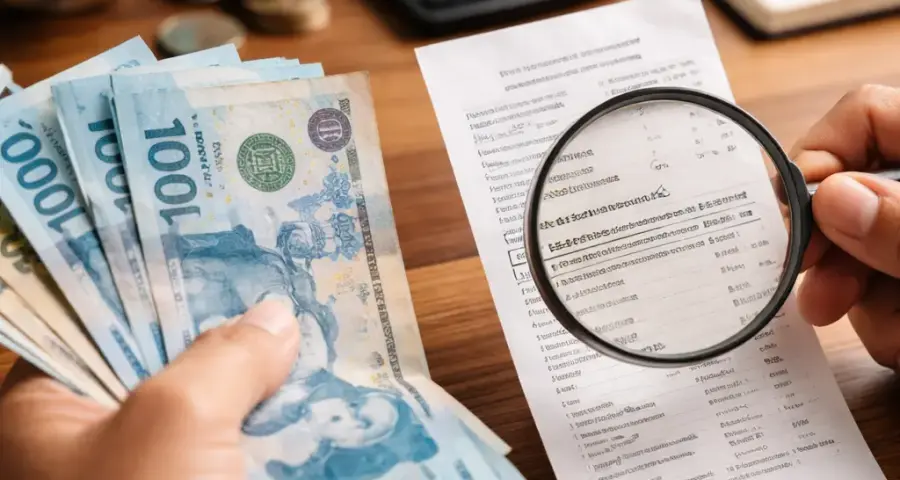
Many OFWs assume the flat fee they see on the screen is the total cost. In reality, that fee covers only the provider’s administration. The larger deduction often comes from the exchange rate markup, which can range from 1% to 5% above the interbank rate. That percentage can erase a significant portion of your hard-earned income over time.
Why Banks Don’t Advertise These Fees
Banks and remittance companies have a profit incentive to keep the total cost opaque. A typical bank transfer advertises a low sending fee of ₱150 or $3, but then applies a foreign exchange markup that is three times the industry average. Because the markup is built into the rate, it is not displayed as a separate line item. This practice is legal in most countries but leaves OFWs underinformed. Financial regulators in the Philippines, such as the Bangko Sentral ng Pilipinas (BSP), have started pushing for more transparent pricing, but many providers still rely on the confusion between rate and fee. For a related guide, see Why OFW Remittances Are Still the Philippines Economic Lifeline.

How Banks Charge Extra Fees on Remittances
Understanding the fee structure is the first step to protecting your money. Banks and money transfer operators (MTOs) typically apply four layers of charges. Each layer reduces the final amount your family receives.

Transfer Fee
This is the fixed or percentage-based charge you see before confirming the transaction. It covers the cost of processing the payment. For bank-to-bank wire transfers, this can be $15 to $50. For digital services like Wise or Maya, it can be as low as $1 to $5. However, a low transfer fee does not guarantee a low total cost if the exchange rate is poor.
Foreign Exchange Markup Fee
This is the biggest hidden cost. The provider buys foreign currency at the interbank rate but sells it to you at a marked-up rate. For example, if the mid-market rate is ₱56.00 per USD, a bank might quote you ₱54.80. The difference of ₱1.20 per dollar represents a 2.1% markup. On a $1,000 transfer, that is $21 lost to the exchange spread. Combined with a sending fee, the total cost can exceed 4%.
Intermediary Bank Deductions
When you send money via the SWIFT network, your money may pass through one or more correspondent banks before reaching the Philippine bank. Each intermediary can deduct a fee, often $10 to $25 per transfer. These deductions are not disclosed at the point of sending, so your family receives less than expected with no clear explanation.
Receiving Fee
The recipient’s bank in the Philippines may charge a receiving or crediting fee. This fee is deducted from the incoming amount before it is deposited into the account. It is common with local banks like BDO, BPI, or Metrobank. Receiving fees range from ₱50 to ₱300 per transaction.
Why OFWs Lose Money in Money Transfers
The combination of these hidden layers means that a single remittance can lose 3% to 7% of its value before it reaches a family member. Over a year, an OFW sending $1,000 monthly could lose between $360 and $840 — money that could have gone to school tuition, medical expenses, or savings.
Many OFWs also fall into the trap of comparing only the upfront transfer fee. They see a $5 fee and assume it is cheaper than a $15 fee, not realizing the $5 service has a wider exchange rate spread that costs them more in total. Hidden fees in OFW remittances thrive on this lack of comparison.
What Fees Should I Watch Out For When Sending Remittances?
When evaluating a remittance service, always check for these five fee types:
- Exchange rate spread: Compare the provider’s rate to the Google mid-market rate at the time of transfer.
- Flat transfer fee: Usually listed, but can vary by send amount and payment method (credit card vs. bank debit).
- SWIFT or intermediary fees: Ask the receiving bank if they have a correspondent bank charge.
- Receiving or crediting fee: Confirm with your family’s bank whether incoming international transfers have a deduction.
- Conversion fee: Some providers charge an additional 0.5% to 1% for converting currency, even on top of the spread.
How to Avoid Hidden Charges in OFW Remittances
Avoiding hidden charges requires a shift in mindset: treat the total cost, not just the fee, as your benchmark. Here are seven proven strategies to keep more money in your family’s pocket.
1. Use a Transparent Digital Service
Platforms like Wise, Revolut, and Maya Money show you the mid-market exchange rate and the exact fee before you confirm. They do not hide the spread. For example, Wise typically charges a 0.5% to 1% total fee including the exchange rate, whereas traditional banks can charge 3% to 5%. That difference adds up.
2. Avoid SWIFT When Possible
SWIFT transfers are the most expensive option because of intermediary bank fees. Instead, use services that transfer money via local banking partnerships (like Wise or Remitly) or digital wallets. These bypass the correspondent bank network entirely.
3. Compare Total Cost Using a Comparison Tool
Websites like Monito, Exiap, or CompareRemit allow you to input the send amount and destination to see the final receive amount across multiple providers. Always check the total cost before sending. Many OFWs are surprised to find that a service with a $3 fee can deliver $10 more than a service with a $1 fee because of the exchange rate.
4. Send Larger Amounts Less Frequently
If possible, consolidate smaller transfers into a larger monthly or bi-monthly transfer. Since many fees are fixed (like the sending fee and intermediary deductions), sending $2,000 once instead of $1,000 twice can cut the fee percentage in half.
5. Receive in a Digital Wallet
Some services allow your family to receive money directly into a GCash or Maya wallet. These wallets often have lower receiving fees than traditional brick-and-mortar banks. For example, receiving via GCash may cost ₱0 to ₱50, whereas a bank deposit could cost ₱150 to ₱300.
6. Monitor Promo Periods and Discounts
Many digital remittance services offer zero-fee promotions for first-time users or during holiday seasons. For example, Wise sometimes waives the transfer fee for the first transfer up to a certain amount. Take advantage of these promotions but still compare the total cost, because the exchange rate may be less favorable during promos.
7. Read the Fine Print on Receiving Banks
Ask your family member to check with their bank about any incoming international transfer fees. Some banks in the Philippines, like Security Bank or UnionBank, have lower receiving fees than others. If possible, have your family open an account at a bank that does not charge for incoming remittances.
Which Remittance Services Have the Lowest Fees?
No single service is cheapest for every amount and destination. However, based on typical $1,000 transfers to the Philippines, the following comparison shows the range of total costs:
| Service | Upfront Transfer Fee | Exchange Rate Markup | Total Cost (approx) | Notes |
|---|---|---|---|---|
| Wise | $4.50 – $6.50 | 0.5% – 0.8% | $10 – $14 | Shows mid-market rate; no intermediary fees. |
| Remitly | $0 – $3.99 | 1.5% – 2.5% | $15 – $29 | Economy tier has lower rate; Express tier faster but costlier. |
| WorldRemit | $1.99 – $4.99 | 1.0% – 2.0% | $12 – $25 | Fees vary by payout method (bank vs. cash pickup). |
| Western Union | $4 – $10 | 2.0% – 4.0% | $24 – $50 | Widely available but high total cost; intermediary fees possible. |
| Bank Wire (SWIFT) | $15 – $50 | 1.5% – 3.0% | $30 – $80 | Includes intermediary deductions and receiving fees. |
| Maya Money | $1 – $3 | 1.0% – 1.5% | $11 – $18 | Good for smaller amounts; receive directly to Maya wallet. |
Do Exchange Rates Affect Total Remittance Cost?
Yes, and often more than the transfer fee itself. The exchange rate spread is the single largest cost component for most remittances. For example, if the mid-market rate is ₱56.00 per USD and a bank uses ₱54.50, the spread is ₱1.50 per dollar. On a $1,000 transfer, that is $26.78 lost to the spread. Adding a $20 sending fee brings the total cost to $46.78, or 4.7% of the amount sent. If you had used a service with a 0.7% spread and a $5 fee, the total cost would be $12, or 1.2%. That is a difference of $34.78 per transfer.
How to Maximize Remittance Value Safely
Maximizing value does not mean using the cheapest unknown service. Safety is paramount. Here is a step-by-step strategy for OFWs who want to keep more of their money without risking a scam.
Step 1: Verify Regulation
Only use services registered with the BSP in the Philippines or with financial authorities in your host country (e.g., FCA in the UK, MAS in Singapore, FinCEN in the US). This ensures consumer protection and dispute resolution.
Step 2: Test with a Small Amount
Before committing to a new service, send a small test transfer of $50 or $100. Compare the amount received with the quoted amount. This reveals any undisclosed deductions.
Step 3: Set Up Alerts for Rate Changes
Use rate alert tools from services like Wise or XE.com to send money when the exchange rate is most favorable. A 1% improvement in rate on a $1,000 transfer equals an extra $10 for your family.
Step 4: Automate Transfers with a Limit Order
Some services allow you to set a target exchange rate. When the market reaches that rate, the transfer executes automatically. This prevents emotional decisions and captures better rates.
Step 5: Keep Records
Save every transaction receipt, including the exchange rate used. Over a year, compare the total amount sent versus the total amount received. This lets you calculate the true cost and decide if you need to switch providers.
Useful Resources
Use the following tools to compare and verify remittance costs before sending:
- Monito: Compare money transfer services to the Philippines — real-time total cost comparisons across dozens of providers.
- Bangko Sentral ng Pilipinas: Remittance consumer protection — official guidelines and complaint process for OFW remittances.
Frequently Asked Questions About Hidden Fees in OFW Remittances
What are hidden fees in OFW remittances ?
Hidden fees are charges not clearly shown on the transaction receipt, primarily the exchange rate markup, intermediary bank deductions, and receiving fees that reduce the amount your family gets.
How do banks charge extra fees on remittances?
Banks charge a flat sending fee, apply a markup on the exchange rate, and may deduct additional fees through correspondent banks. The recipient’s bank may also charge a crediting fee.
Why do OFWs lose money in money transfers?
OFWs lose money primarily because of the exchange rate spread and multiple layers of undisclosed fees. Without comparing total costs, they can lose 3% to 7% per transfer.
What fees should I watch out for when sending remittances?
Watch for the sending fee, exchange rate spread, intermediary bank fees, receiving or crediting fee, and any conversion charge. Always ask for the mid-market rate comparison.
How can I avoid hidden charges in OFW remittances?
Use transparent services like Wise or Maya Money, avoid SWIFT transfers, send larger amounts less often, and compare total cost on a site like Monito before each transfer.
Which remittance services have the lowest fees?
Wise and Maya Money often have the lowest total cost for bank deposits to the Philippines, with fees around 1% to 1.5% total. Remitly and WorldRemit can also be competitive for specific amounts.
Do exchange rates affect total remittance cost?
Yes. The exchange rate spread is the largest hidden cost. A 2% spread on $1,000 equals $20 lost, which is often more than the sending fee.
How do transfer fees reduce OFW income?
Each transfer fee and hidden charge reduces the net amount your family receives. Over a year of monthly transfers, these costs can total $500 or more, directly reducing the income available for expenses.
What is the cheapest way to send money to the Philippines?
The cheapest way is usually a digital service like Wise or Maya Money when sending to a bank account or wallet. Avoid SWIFT transfers and cash pickup services, which have higher fees.
How can OFWs maximize remittance value safely?
Use a regulated provider, compare total cost, send larger amounts less frequently, set rate alerts, and test with a small amount before committing.
What is an exchange rate spread in remittances?
It is the difference between the mid-market exchange rate and the rate the provider offers. A wider spread means higher hidden charges.
What are intermediary bank deductions ?
When money travels through the SWIFT network, correspondent banks can deduct fees. These are not shown at the time of sending and reduce the amount received.
Is Western Union cheaper than bank transfer?
Not always. Western Union can be cheaper for small cash pickups, but for larger bank deposits, digital services like Wise often deliver more value due to better exchange rates.
Does GCash charge receiving fees for remittances?
GCash typically does not charge a receiving fee for incoming international remittances from partner services, but confirm with your specific provider.
Can I negotiate bank transfer fees?
Some banks reduce fees for high-volume customers. It is worth asking, but most OFWs are better off using a digital competitor with lower standard rates.
What is a SWIFT transfer fee?
It is the fee charged by the sending bank for processing an international wire via the SWIFT network. It typically ranges from $15 to $50.
Are online money transfer platforms safe?
Yes, if they are regulated by financial authorities. Look for BSP registration, two-factor authentication, and transparent fee disclosure.
How can I calculate the real cost of a remittance?
Use a comparison tool like Monito or manually calculate: (amount sent – amount received) ÷ amount sent × 100 to get the total cost percentage.
Do banks hide the exchange rate margin?
Many banks do not clearly display the margin above the mid-market rate. They list the rate they offer without showing the markup.
What should I do if I suspect hidden fees?
Contact BSP’s consumer protection desk or file a complaint with your host country’s financial regulator. Keep all transaction records as evidence.