
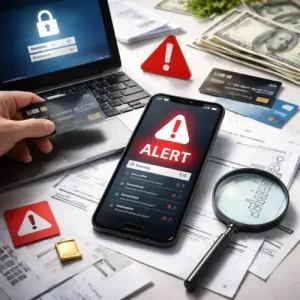

Signs Your Bank Account May Be at Risk Key Takeaways
Knowing the Signs Your Bank Account May Be at Risk is the first step to protecting your money from fraud and unauthorized access.
- Eight clear warning signs of bank fraud include unknown transactions, unexpected balance drops, failed login attempts, and alerts from unfamiliar devices or locations.
- Common causes of risk—like weak passwords, phishing scams, and unsecured networks—are explained with practical examples for OFWs, freelancers, and everyday users.
- Immediate actions—such as enabling two-factor authentication, checking bank statements weekly, and reporting suspicious activity—help you protect your bank account from hackers .
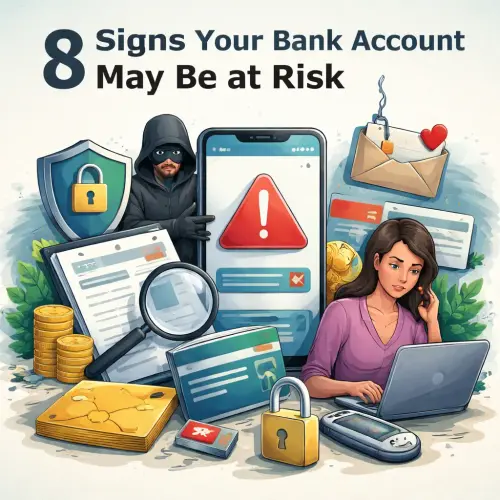
Why Understanding the Signs Your Bank Account May Be at Risk Matters Today
Every day, thousands of people around the world discover that their bank accounts have been compromised. Whether you are a Filipino OFW sending remittances home, a young professional using mobile banking, or a small business owner handling digital payments, the risk is real. Fraudsters constantly develop new tactics to steal login credentials, drain balances, and disappear without a trace.
The good news? Most attacks leave telltale clues before any major damage occurs. By learning to recognize these clues, you can catch a problem early and avoid financial loss. For a related guide, see 11 Types of Bank Accounts and Their Key Benefits Guides.
In this guide, we walk through eight of the most common warning signs of bank fraud. We also answer questions like how can I know if my bank account is hacked and what should I do if I see suspicious bank activity. You will leave with a clear action plan to keep your accounts safe.
Sign 1: Unknown Transactions in Your Account History
One of the earliest Signs Your Bank Account May Be at Risk is the appearance of transactions you do not recognize. These could be small test charges—often under PHP 100—or larger amounts that seem out of place.
Why Are Unknown Transactions a Danger Sign?
Fraudsters frequently run small transactions to confirm that an account is active before attempting larger thefts. Even a single tiny debit from an unfamiliar merchant should raise an immediate red flag. Many people ignore these small charges because they assume it is a mistake, but that is exactly what the criminals expect.
How to Detect Unauthorized Access Using Transaction History
Set a weekly reminder to review your transaction history online. Look for any charge you cannot explain, including fees you did not authorize. If you see an unknown transaction, contact your bank immediately. Banks often reverse fraudulent charges if you report them within 30 days—or sooner under some policies.
Sign 2: Unexpected Balance Drops Without a Clear Reason
If your account balance suddenly drops and you cannot account for the difference, do not assume it is a banking glitch. This is another major warning signs of bank fraud that demands immediate attention. For a related guide, see 14 Questions to Ask Before Opening a Bank Account Today.
What Causes Bank Account Security Risks Like This?
Common causes include automatic payments you forgot about, fees you overlooked, or—more alarmingly—unauthorized withdrawals. In some cases, fraudsters make multiple small withdrawals that add up to a significant amount over a few days. Because the individual amounts remain low, victims sometimes miss them until the total damage is large.
What Should I Check Regularly in My Bank Account?
Check your available balance, pending transactions, and cleared items at least once a week. Compare the figures against your own records—receipts, pay slips, and digital payments. If anything feels off, do not wait. Call your bank and ask for a transaction dispute.
Sign 3: Failed Login Attempts or Password Reset Notifications
Another unmistakable Signs Your Bank Account May Be at Risk is a notification about a failed login attempt or an unexpected password reset request. Many banking apps now send alerts whenever someone enters an incorrect password or tries to reset credentials.
How Can Weak Passwords Lead to Bank Fraud?
Weak passwords—like “123456,” “password,” or your birth date—are easy to guess. Criminals use automated tools that try thousands of combinations per second. If your password is simple, they can break in within minutes. Using a unique, complex password for each banking account is one of the simplest ways to stop this threat.
What to Do If You See a Failed Login Alert
Take the alert seriously. Change your password immediately, review recent account activity, and enable two-factor authentication if you have not already. If you receive a password reset email you did not request, do not click any link—go directly to your bank’s official website or app.
Sign 4: Unfamiliar Devices or Locations Accessing Your Account
Most modern banking apps display the devices and geographic locations where your account has been accessed. Seeing a device you do not own or a login from a city you have never visited is a clear clue about how to detect unauthorized access to my bank account.
What Security Features Protect Online Banking From This?
Banks offer device management features that list every phone, tablet, or computer authorized for your account. You can revoke access to any unfamiliar device instantly. Combined with biometric authentication—fingerprint or face recognition—this makes it much harder for criminals to stay hidden.
How Do I Protect My Bank Account From Hackers Using This Sign?
Regularly audit the devices linked to your account. Remove any that you no longer use or that look suspicious. Also, log out of banking apps on shared computers or public terminals. A single forgotten session on a library computer could expose your entire account.
Sign 5: Sudden Notifications From Your Bank About Unusual Activity
Banks employ sophisticated algorithms to flag transactions that deviate from your normal patterns. If you receive an alert about a large purchase you did not make or a transfer to an unknown account, pay attention. These alerts are designed to protect you, but only if you act on them.
How Can Phishing Attacks Affect Bank Accounts?
Phishing is a technique where criminals send fake emails, texts, or calls that appear to be from your bank. They ask for your account number, password, or one-time PIN. If you provide those details, the attackers gain full access. Even if you have alerts enabled, a phished credential can bypass them because the login looks legitimate.
What Should I Do If I See Suspicious Bank Activity?
Never reply to or click links in unsolicited messages. Instead, open your bank’s official app or call the number on the back of your card. Report the suspicious activity immediately and ask them to freeze your account temporarily while they investigate.
Sign 6: Missing or Delayed Bank Statements
A sudden interruption in receiving your bank statements—whether by mail or email—can indicate that someone has changed your contact information. This is a less obvious Signs Your Bank Account May Be at Risk, but it is just as serious.
Why Is Monitoring Bank Statements Important?
Statements provide a complete record of every transaction. When they stop arriving, you lose visibility into what is happening with your money. Fraudsters change your address or email so that you do not receive the evidence of their activity.
How Can I Know if My Bank Account Is Hacked Through Statement Gaps?
If you usually receive statements on the 1st of the month and nothing arrives by the 5th, log into your account directly. Verify that your registered email and mailing address are still correct. If they have been changed without your permission, contact your bank immediately.
Sign 7: Unexpected Credit Score Changes
Your credit score can drop if fraudulent accounts are opened in your name or if unauthorized loans are taken out using your identity. While this is not a direct account alert, it is a powerful indirect warning signs of bank fraud.
What Causes Bank Account Security Risks That Affect Credit?
Identity theft is a major cause. When criminals steal your personal information—name, birthday, Tax Identification Number—they can open new bank accounts, apply for credit cards, or take out loans. These actions appear on your credit report and can damage your score for years.
How Do I Protect My Bank Account From Hackers Wrecking My Credit?
Check your credit report at least once a year through accredited agencies. In the Philippines, you can request a report from the Credit Information Corporation (CIC). Dispute any account you do not recognize. Early detection helps you stop further damage.
Sign 8: Friend or Family Alerts About Suspicious Messages From You
If a friend or family member tells you they received a strange message from your phone or social media account asking for money, treat it as a red flag. Often, account takeovers start with a compromised email or messenger service that leads to your bank.
How Does Two-Factor Authentication Prevent Fraud in This Scenario?
Two-factor authentication (2FA) adds a second step to logging in—usually a code sent to your phone or generated by an authenticator app. Even if someone steals your password, they cannot log in without that second code. This is one of the most effective tools to protect your bank account from hackers in any scenario, including after a social media breach.
How Can I Respond Quickly to Suspected Bank Fraud?
Enable 2FA on your email, social media, and banking accounts immediately. If any account shows signs of unauthorized access, change passwords first, then notify your bank. Time matters—fraudsters move fast, so your response must be faster.
Practical Steps to Act on These Signs
Recognizing the Signs Your Bank Account May Be at Risk is only half the battle. You must also take consistent action. Here is a simple checklist:
- Enable two-factor authentication on every banking app you use.
- Review your transaction history and bank statements weekly.
- Use unique, strong passwords for each account—consider a password manager.
- Avoid making banking transactions over public Wi-Fi or shared computers.
- Set up account alerts for all transactions above a certain amount.
- Update your contact information with your bank immediately if it changes.
- Freeze your credit or lock your account if you suspect identity theft.
These habits reduce your exposure and make it much harder for criminals to succeed.
Useful Resources
For deeper guidance on securing your finances, explore these external resources:
- Federal Trade Commission – How to Keep Your Personal Information Safe – A comprehensive guide to protecting your identity and accounts.
- Bangko Sentral ng Pilipinas (BSP) – Consumer Financial Protection – Official consumer protection resources for Filipino banking customers.
Frequently Asked Questions About Signs Your Bank Account May Be at Risk
What are the 8 signs your bank account may be at risk ?
The eight signs are: unknown transactions, unexpected balance drops, failed login attempts or password reset alerts, unfamiliar devices or locations accessing your account, sudden fraud alerts from your bank, missing or delayed bank statements, unexplained credit score changes, and reports from friends or family about suspicious messages from you.
How can I know if my bank account is hacked ?
You can often tell by seeing unknown transactions, receiving login notifications you do not recognize, noticing your balance has dropped without explanation, or discovering that your password no longer works. Any of these signs warrants immediate investigation.
What are the warning signs of bank fraud ?
Common warning signs include small test charges, multiple failed login attempts, alerts about changed contact information, and receiving emails or calls that ask for your account credentials. If something feels off, trust your instinct and check your account.
Why are unknown transactions a danger sign ?
Unknown transactions, especially small ones, often indicate that a fraudster is testing whether your account is active and able to be drained. Even a charge of PHP 1.00 from an unfamiliar source should be considered a red flag.
How do I detect unauthorized access to my bank account ?
Use your bank’s device management feature to see every login location and device. Check for sessions you do not recognize. Also watch for security alerts about password resets that you did not initiate.
What should I do if I see suspicious bank activity ?
Immediately contact your bank through its official app or hotline. Freeze your account if necessary, change your password, and enable two-factor authentication. Report the activity as fraud so the bank can start an investigation.
How can phishing attacks affect bank accounts ?
Phishing attacks trick you into revealing your username, password, or one-time PIN through fake emails, texts, or calls that appear to come from your bank. Once the attacker has that information, they can log in and steal your money.
What security features protect online banking ?
Key features include two-factor authentication, biometric login (fingerprint or face recognition), transaction alerts, device management, and encryption. Some banks also offer one-time PINs and account freezing options within the app.
How does two-factor authentication prevent fraud ?
Two-factor authentication requires a second piece of information—like a code sent to your phone or generated by an app—in addition to your password. Even if a thief steals your password, they cannot access your account without that second factor.
Why is monitoring bank statements important ?
Bank statements provide a complete record of every transaction. Regular monitoring helps you catch unauthorized charges early, before they grow into large losses. It also helps you spot when a fraudster has changed your contact information.
What causes bank account security risks ?
Risks come from weak passwords, phishing scams, unsecured public Wi-Fi, outdated software, and sharing login credentials. Physical theft of phones or laptops also poses a risk, especially if you do not lock your device.
How can weak passwords lead to bank fraud ?
Weak passwords are easy to guess or crack with automated software. If you use the same password for multiple accounts, a breach on one site can give criminals access to your bank account. Strong, unique passwords prevent this chain reaction.
How do I protect my bank account from hackers ?
Use strong unique passwords, enable two-factor authentication, review your account activity weekly, avoid banking on public Wi-Fi, and never click links in unsolicited messages. Also, keep your banking app and phone software up to date. For a related guide, see 12 Online Banking Safety Tips to Protect Your Money SEO.
What should I check regularly in my bank account ?
Check your transaction history, available balance, pending transactions, linked devices, and registered contact information. Look for any changes you did not make. Weekly checks are recommended for most users.
How can I respond quickly to suspected bank fraud ?
Call your bank’s fraud hotline immediately. Change your password and enable two-factor authentication. If a large amount is at risk, ask to freeze the account. Report the incident to the police or cybercrime unit if necessary.
Are small test charges always fraud?
Not always, but they are suspicious enough to verify. Some legitimate merchants perform small authorizations. However, if you do not recognize the merchant, do not ignore it. Contact your bank to confirm whether the charge is valid.
Can fraudsters still access my account with two-factor authentication?
It is much harder, but not impossible. Advanced attacks like SIM swapping can intercept SMS codes. Using an authenticator app instead of SMS reduces that risk. Still, 2FA remains one of the strongest defenses available today.
What should I do if I lose my phone with banking apps?
Immediately log into your bank account from a computer and remove the lost device from your trusted devices list. Then contact your mobile carrier to suspend the SIM. Change your banking password as soon as possible.
How do I know if someone is trying to phish me?
Phishing emails or messages often have urgent language, generic greetings, misspellings, and suspicious links. Hover over any link before clicking to see the real URL. If it does not match your bank’s official website, do not click.
Is it safe to use mobile banking apps on public Wi-Fi?
It is not recommended. Public Wi-Fi networks are often unencrypted, allowing attackers to intercept your data. If you must access your bank account while away from home, use your mobile data plan or a trusted VPN.