

Smart Ways to Use the Credit Cards very Responsibly Key Takeaways
Using a credit card wisely is one of the most effective ways to build a solid credit history, earn valuable rewards, and manage cash flow — without falling into debt.
- Pay your balance in full every month to avoid interest charges and build a positive payment history.
- Keep your credit utilization below 30% to protect your credit score and show lenders you manage debt well.
- Choose cards with rewards that match your spending habits, and never overspend just to earn points.
Why Understanding Smart Ways to Use the Credit Cards very Responsibly Matters
Credit cards are powerful financial tools when used correctly. They offer convenience, fraud protection, and the opportunity to build a strong credit profile. However, without a clear strategy, they can lead to high-interest debt and long-term financial stress. Whether you are a student getting your first card or a freelancer managing business expenses, learning these responsible habits will help you stay in control.
Many people ask, Why is responsible credit card use important? The answer is simple: your credit score affects your ability to rent an apartment, buy a car, get a mortgage, and even land certain jobs. By adopting Smart Ways to Use the Credit Cards very Responsibly, you set yourself up for a healthier financial future.
1. Pay Your Balance in Full Every Month
The single most important rule for responsible credit card use is to pay off your statement balance in full before the due date. When you do this, you never pay a cent in interest. You also demonstrate to credit bureaus that you are a reliable borrower, which boosts your credit score over time.
How often should credit cards be paid off? Ideally, once a month — right after your statement closes. Some people prefer to make multiple smaller payments during the month, but the key is to never carry a balance into the next billing cycle if you can avoid it. For a related guide, see 7 Credit Mistakes You Should Avoid at All Costs.
Set Up Auto-Pay to Stay on Track
One of the best Smart Ways to Use the Credit Cards very Responsibly is to enroll in automatic payments for at least the minimum due. If you can, set it to pay the full statement balance. This removes the risk of forgetting a payment, which can trigger late fees and a drop in your credit score.
2. Keep Your Credit Utilization Low
How does credit utilization affect credit score? Credit utilization — the percentage of your total credit limit you are using — is the second most important factor in your FICO score. Experts recommend keeping it below 30%, and the lower, the better. For example, if you have a total credit limit of $10,000, try to keep your combined balance under $3,000. For a related guide, see 13 Factors That Affect Your Credit Score the Most.
If you find yourself approaching that threshold, consider paying down part of your balance before your statement date. This simple habit is one of the most effective Smart Ways to Use the Credit Cards very Responsibly because it directly improves your credit utilization ratio.
Request a Credit Limit Increase
Another tactic to lower your utilization is to ask your card issuer for a higher credit limit — but only if your income has increased and you are confident you will not spend more as a result. A higher limit automatically lowers your utilization percentage, as long as your spending stays the same.
3. Understand How Credit Card Interest Rates Work
How do credit card interest rates work? Credit cards charge interest on any balance you carry past the due date, using an Annual Percentage Rate (APR). The average APR in 2025 hovers between 20% and 28%. If you carry a $1,000 balance for a year at 24% APR, you could end up paying about $240 in interest alone.
The good news is that if you pay your full balance each month, you get an interest-free grace period — usually between 21 and 25 days from the statement date. That is why one of the best Smart Ways to Use the Credit Cards very Responsibly is to never carry a balance unless you are on a 0% introductory APR offer and have a repayment plan.
4. Use Rewards Programs Wisely — Never Spend Extra Just for Points
How do rewards programs work on credit cards? Most cards offer cash back, travel miles, or points for every dollar you spend. For instance, a card might give 2% cash back on groceries and 1% on everything else. Responsible users treat rewards as a bonus, not a reason to spend more.
A common trap is buying something you would not otherwise purchase just to earn points. That is how people slip into debt. The safest approach is to use your rewards card for regular, budgeted expenses like groceries and gas, then pay the balance in full. That way, you earn rewards without ever paying interest.
Choose the Right Card for Your Lifestyle
Beginners often wonder how can beginners manage credit cards wisely. Start by selecting a card with no annual fee and a rewards category that matches your spending — such as a student card with cash back on dining and entertainment.
5. Create a Monthly Budget and Stick to It
How can I avoid overspending with credit cards? The most effective strategy is to treat your credit card like a debit card. Before you swipe, check that the purchase fits within your monthly budget. Many apps let you set spending alerts or category limits so you know when you are close to your cap.
One of the most overlooked Smart Ways to Use the Credit Cards very Responsibly is to review your budget at the beginning of each month and allocate a specific amount for credit card purchases. When that amount is used up, switch to cash or a debit card until the next cycle.
6. Avoid These Common Credit Card Mistakes
What are common credit card mistakes to avoid? Even experienced users slip up occasionally. Here are the pitfalls to watch for:
- Making only the minimum payment each month — this leads to years of interest payments.
- Applying for too many cards at once, which triggers multiple hard inquiries and lowers your score.
- Ignoring your credit card terms, such as annual fees or foreign transaction fees.
- Maxing out your card even if you pay it off later — that high utilization can still temporarily hurt your score.
By recognizing these errors early, you can adopt Smart Ways to Use the Credit Cards very Responsibly and avoid costly setbacks.
7. Build a Strong Credit History from the Start
How can credit cards help build good credit history? Credit scoring models reward a long history of on-time payments and low balances. When you use a credit card responsibly over several years, you create a track record that makes lenders more willing to offer you loans at competitive rates.
If you are just starting out, consider becoming an authorized user on a parent’s card or applying for a secured credit card. Both options allow you to build credit even with limited income. This is one of the most practical Smart Ways to Use the Credit Cards very Responsibly for students and young professionals.
What Spending Habits Improve Credit Score?
Consistency matters. Use your card at least once every few months to keep the account active, pay on time every time, and keep your utilization low. These three habits alone can steadily push your score higher.
8. Review Your Statements Every Month
Set aside 10 minutes each month to scan your credit card statement. Look for unauthorized charges, subscription renewals you forgot about, and billing errors. Catching a fraudulent transaction early can save you money and prevent damage to your credit.
This is also a good time to compare your actual spending against your budget. If you notice a category where you consistently overspend, adjust your budget or find ways to cut back. Regular review is a cornerstone of Smart Ways to Use the Credit Cards very Responsibly.
9. Use Credit Cards as a Tool for Convenience, Not Emergency Debt
What is the safest way to use a credit card? Always use it for planned purchases, not impulsive ones. Avoid putting emergency expenses — like a medical bill or car repair — on a credit card unless you have a concrete plan to pay it off within the grace period.
Instead, build an emergency fund of three to six months of expenses. When an unexpected cost arises, use your savings first. Keep your credit card as a backup for genuine emergencies, not as an everyday crutch.
10. Take Advantage of Introductory 0% APR Offers — Carefully
Some cards offer a 0% annual percentage rate on purchases or balance transfers for 12 to 18 months. This can be a smart way to finance a large purchase or pay down existing debt without interest — but only if you pay the full balance before the promotional period ends.
Set a calendar reminder for two months before the promo expires. If you still have a balance, transfer it to another low-interest card or accelerate your payments. Misusing these offers can lead to backdated interest charges. Used wisely, they are among the more advanced Smart Ways to Use the Credit Cards very Responsibly.
11. Track Your Credit Score Regularly
Many card issuers now offer free credit score monitoring through your online account. Check your score once a month to see how your habits are affecting it. If your score drops, look for the cause — perhaps a late payment or high utilization — and correct it immediately.
Tracking your score also helps you spot identity theft early. Unusual changes in your score can be a red flag that someone has opened an account in your name. Proactive monitoring is a key element of Smart Ways to Use the Credit Cards very Responsibly for anyone serious about financial health.
12. Know When to Stop — and When to Call for Help
What are smart ways to avoid credit card debt? Ultimately, the smartest way is to stop using your card altogether if you feel you are losing control. If you are carrying a balance, paying only the minimum, or using credit to cover everyday living costs, pause and reassess.
If debt has already accumulated, consider reaching out to a nonprofit credit counseling service. Organizations like the National Foundation for Credit Counseling offer free financial advice and can help you create a debt management plan. Recognizing the signs of trouble early is one of the most important Smart Ways to Use the Credit Cards very Responsibly.
Useful Resources
For deeper dives into credit scoring and debt management, check these trusted sources:
- Consumer Financial Protection Bureau – Credit Cards – Government resource covering rights, fees, and smart usage tips.
- myFICO Credit Education – Learn how credit scores are calculated and what actions improve them.
Conclusion: Put These Smart Ways to Use the Credit Cards very Responsibly Into Action
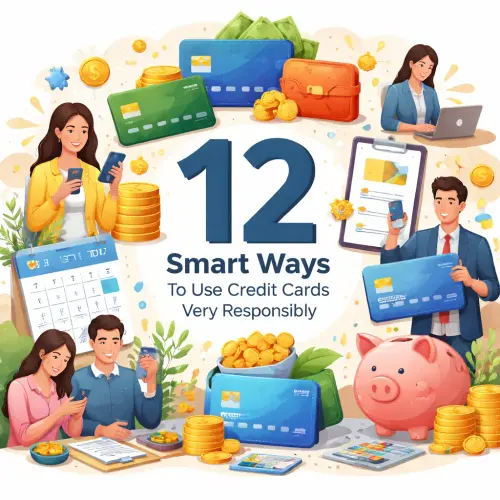
Using a credit card does not have to be risky. By applying the 12 strategies outlined above — especially paying in full, keeping utilization low, and sticking to a budget — you can enjoy the benefits of credit cards without falling into debt. Whether your goal is to build good credit history, earn travel rewards, or simply manage monthly expenses more efficiently, these Smart Ways to Use the Credit Cards very Responsibly will keep you on the right track. For a related guide, see 11 Ways to Improve Your Credit Score Starting Today.
Start with one or two habits, master them, then add more over time. Your future self — and your credit score — will thank you.
Frequently Asked Questions About Smart Ways to Use the Credit Cards very Responsibly
How can I use credit cards responsibly ?
Pay your full balance each month, keep your utilization low, and never spend beyond your budget. These three habits form the foundation of responsible credit card use.
What are the best practices for credit card management ?
Set up auto-pay for at least the minimum, review your statement monthly, avoid cash advances, and use rewards only for purchases you already planned to make.
Why is responsible credit card use important ?
It protects your credit score, prevents high-interest debt, and helps you qualify for loans, mortgages, and better insurance rates in the future.
How does credit utilization affect credit score ?
Credit utilization accounts for 30% of your FICO score. Keeping it below 30% shows lenders you are not overextended, which positively impacts your score.
What are common credit card mistakes to avoid ?
Common mistakes include paying only the minimum, applying for too many cards at once, ignoring annual fees, and carrying a balance without a repayment plan.
How can credit cards help build good credit history ?
On-time payments, low balances, and long account history are the key factors. A credit card used responsibly over several years builds a strong credit file.
What is the safest way to use a credit card ?
Use it for planned, budgeted purchases only, and always pay off the balance in full each month. Avoid using it for impulse buys or emergency expenses you can’t pay immediately.
How do credit card interest rates work ?
Interest is charged on any balance carried past the due date, calculated using your annual percentage rate (APR). Paying in full avoids interest altogether.
What are smart ways to avoid credit card debt ?
Stick to a monthly spending cap, treat your card like a debit card, and use a 0% APR promotion only if you can repay the balance before the promo ends.
How often should credit cards be paid off ?
Once a month, after your statement closes, pay the full statement balance. Some people prefer to pay weekly, but monthly full payment works perfectly.
What are the benefits of responsible credit card usage ?
Benefits include a higher credit score, access to rewards and cash back, travel insurance, purchase protection, and easier approval for future loans.
How can beginners manage credit cards wisely ?
Start with a no-annual-fee card, set a low spending limit, use it for small recurring purchases like a streaming service, and pay it off immediately.
What spending habits improve credit score ?
Consistent on-time payments, low credit utilization, and keeping older accounts open are the three habits that most reliably improve your score.
How do rewards programs work on credit cards ?
You earn points, miles, or cash back for every dollar spent. Rewards can be redeemed for travel, statement credits, gift cards, or merchandise.
How can I avoid overspending with credit cards ?
Set a monthly credit card budget, use spending alerts, and avoid storing your card information on shopping sites to reduce impulse purchases.
What is a secured credit card, and should I get one?
A secured card requires a cash deposit that serves as your credit limit. It’s ideal for building or rebuilding credit because it reports to credit bureaus like a regular card.
Can I have too many credit cards?
Having multiple cards isn’t harmful if you manage them well, but each new application causes a hard inquiry. Stick to two or three cards you can monitor easily.
What is a balance transfer, and when should I use one?
A balance transfer moves existing debt to a new card with a lower APR, often 0% for a limited time. Use it only if you can pay off the balance before the promo ends.
Does closing a credit card hurt my credit score?
Yes, because it reduces your total available credit (increasing your utilization) and shortens your credit history. Keep old accounts open even if you don’t use them.
What should I do if I miss a payment?
Pay as soon as you notice. Many issuers waive the first late fee if you call and explain. Late payments over 30 days can hurt your score, so act quickly.