


Smart Ways to Organize Your Tax Documents Key Takeaways
When your paperwork is scattered, it’s easy to forget a deductible expense or misreport income.
- Smart Ways to Organize Your Tax Documents start with a digital filing system that categorizes income, expenses, and deductions separately.
- Keeping both physical and digital copies of receipts ensures you’re covered during an audit without cluttering your home office.
- A simple tax document checklist created at the start of the year eliminates last-minute scrambles and helps you avoid filing mistakes .
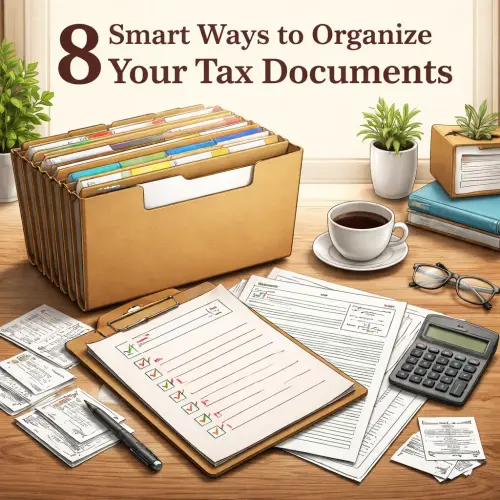
Why Smart Ways to Organize Your Tax Documents Matter All Year Long
Most people think about tax documents organization only when April approaches. But waiting until the last minute leads to misplaced receipts, missed deductions, and errors on your return. By adopting a few consistent habits, you can transform a dreaded chore into a quick annual review. The key is to build a system that works for your specific situation—whether you’re a gig worker tracking multiple income streams or a parent claiming education credits.
How Organized Records Reduce Stress and Errors
When your paperwork is scattered, it’s easy to forget a deductible expense or misreport income. On the other hand, tax record keeping that follows a clear structure helps you see your financial picture clearly. You’ll also feel more confident if the IRS ever asks questions. Plus, organized records can cut the time you spend preparing your return by hours—maybe even days.
How to Organize Tax Documents Before Filing: A Step-by-Step Plan
Before you even open your tax software, take these steps to get your documents in order. This process works whether you file electronically or on paper. For a related guide, see 10 Quick Tax Tips for Beginners.
Step 1: Gather All Income Statements
Start with W-2s, 1099s, and any other forms showing money you earned. Check your email and online portals for digital versions. Make a list of every source of income so nothing slips through.
Step 2: Collect Receipts and Expense Proofs
Now gather receipts for deductions you plan to claim. This includes medical bills, charitable donations, business expenses, and education costs. Sort receipts for taxes by category—for example, all medical receipts together, all business supplies together.
Step 3: Verify Personal Information
Double-check names, Social Security numbers, and bank account details for direct deposit. One wrong digit can delay your refund or cause processing errors.
Step 4: Cross-Reference Against Last Year’s Return
Pull up last year’s filing to see if anything has changed. Did you have the same dependents? Did your income sources shift? This comparison helps you spot missing documents early.
Which Documents Should You Keep Every Year?
Not every piece of paper is worth saving. Here’s a quick guide to tax documents organization for annual retention.
| Document Type | Keep for Filing | Retention Period After Filing |
|---|---|---|
| W-2s and 1099s | Yes | At least 3 years |
| Receipts for deductions | Yes | 3 years (7 if property-related) |
| Bank and investment statements | Only if showing taxable activity | 3 years |
| Mortgage interest statements | Yes | 3 years after selling property |
| Receipts for major purchases | Optional for basis calculation | Until asset is sold |
How Can You Store Tax Records Safely?
Physical documents face risks like fire, theft, and water damage. Digital files need protection from hackers and accidental deletion. The best approach combines both.
Use a Fireproof Safe for Originals
Keep original signed paperwork, such as your filed returns and important contracts, in a fireproof home safe. Label folders clearly by year and category.
Store Digital Copies in Encrypted Folders
Scan all paper documents and save them as PDFs. Use a password-protected folder on your computer or a trusted cloud service like Google Drive or Dropbox—but enable two-factor authentication. This is one of the smart ways to organize your tax documents for long-term security.
Backup Regularly
Set a monthly reminder to back up your digital tax folder. You can use an external hard drive plus cloud storage for redundancy.
Why You Should Start Organizing Tax Documents Early
Procrastination is the enemy of accuracy. When you rush to gather papers in March or April, you’re more likely to overlook a deductible expense or transpose a number. Early tax record keeping gives you time to request missing forms from employers or clients. It also lets you consult a tax professional before the deadline rush.
Best Way to Sort Receipts for Taxes
Receipts are the most common source of tax-paper clutter. Here’s a proven method to sort receipts for taxes without losing your mind.
Categorize by Deduction Type
Use the same categories the IRS recognizes: medical and dental, taxes paid, interest expense, gifts to charity, job expenses, and business costs. Within each category, file chronologically.
Digitize Immediately
Take a photo of every receipt the day you get it. Apps like Expensify or even your phone’s Notes app can do this. Name the file with the date, vendor, and category so it’s searchable.
Monthly Purge
At the end of every month, check your digital receipt folder. Delete duplicates, verify amounts against bank statements, and flag anything that seems unusual.
Should You Keep Digital Copies of Tax Documents?
Absolutely. In fact, the IRS now accepts digital copies of receipts and records during an audit. Digital copies tax documents offer several advantages:
- They take up zero physical space.
- You can search them by keyword in seconds.
- They’re easy to back up and access from anywhere.
- You can share them with your accountant instantly.
Just make sure your digital files are legible. Blurry scans won’t help if the IRS asks for proof.
How Long Should You Keep Tax Records?
The general rule is three years from the date you filed your return. However, there are exceptions. Keep records for six years if you underreported income by more than 25%. Hold onto them for seven years if you filed a loss from worthless securities or bad debt deduction. And if you never filed a return, keep records indefinitely.
How Freelancers Can Organize Tax Paperwork
Freelancer tax paperwork is more complex than an employee’s because you have multiple income sources and deductible expenses. Here’s a system designed for independent workers.
Create Separate Bank Accounts
Use one checking account and one credit card exclusively for business transactions. This separates personal and professional finances automatically.
Track Income by Client
Maintain a spreadsheet or use accounting software like QuickBooks Self-Employed. Log each payment with the client name, date, amount, and invoice number.
Set Up a Quarterly Reminder
Freelancers need to estimate and pay taxes quarterly. Use a calendar alert to review your income and expenses each quarter, then pay your estimated tax.
What Folders Should You Create for Tax Documents?
Having a clear folder structure is one of the smart ways to organize your tax documents. Here’s a recommended hierarchy:
- Tax Year 2025 (parent folder)
- Income (subfolder): W-2s, 1099s, bank interest statements
- Deductions (subfolder): medical, charity, education, business
- Receipts (subfolder): sorted by month or category
- Correspondence (subfolder): letters from IRS or state tax agency
- Filed Returns (subfolder): final return and all supporting schedules
Use the exact same structure year after year so you can quickly find any document.
How Organized Tax Documents Help You Avoid Filing Mistakes
Filing mistakes happen when you’re guessing. Did you include that freelance payment? Is the deduction limit correct for charitable cash donations? Organized records eliminate guesswork. When every number has a supporting document, you can confidently enter figures on your return. This reduces the chance of an IRS notice and speeds up your refund.
What Tools Can Help Manage Tax Records?
You don’t need expensive software. These free and low-cost tools make tax documents organization manageable:
- Google Drive / Dropbox – cloud storage with folder organization
- Evernote – scan and tag receipts with keywords
- Wave – free accounting for freelancers
- IRS Free File – guided preparation for qualifying taxpayers
- Expensify – receipt scanning and expense tracking
How to Prepare a Tax Document Checklist
A tax document checklist is your roadmap. Create one at the beginning of each year and check off items as you gather them. Here’s a sample checklist you can adapt:
- W-2 from each employer
- 1099-NEC or 1099-MISC for freelance work
- 1099-INT for bank interest
- 1099-DIV for dividends
- Mortgage interest statement (Form 1098)
- Student loan interest statement (Form 1098-E)
- Receipts for medical expenses
- Charitable donation receipts
- Business expense receipts (if self-employed)
- Childcare provider information and receipts
- Last year’s tax return for reference
- Social Security numbers for dependents
Useful Resources
For more detailed guidance, check these official sources:
- IRS Publication 552: Recordkeeping for Individuals – Official advice on what to retain and for how long.
- IRS Topic 305: Recordkeeping – Quick tips on maintaining tax records.
Frequently Asked Questions About Smart Ways to Organize Your Tax Documents
How do you organize tax documents before filing?
Start by gathering all income statements, then collect deduction receipts, verify personal information, and cross-check against last year’s return. Use a simple folder system—digital or physical—to keep everything sorted by category. For a related guide, see 12 Things You Need to File Your Taxes Easily.
What tax documents should you keep every year?
Keep W-2s, 1099s, receipts for deductible expenses, bank and investment statements that show taxable activity, mortgage interest statements, and records of major purchases that affect tax basis.
How can you store tax records safely ?
Use a fireproof safe for original paper documents, store digital copies in encrypted folders with two-factor authentication enabled, and create regular backups. Combining physical and digital storage gives you the best protection.
Why is it important to organize tax documents early?
Early organization prevents last-minute scrambling, reduces the chance of missing deductions, gives you time to request missing forms, and lowers stress. It also lets you consult a tax professional before the deadline.
What is the best way to sort receipts for taxes ?
Categorize receipts by deduction type (medical, charity, business, etc.), file them chronologically within each category, and digitize them immediately using a scanning app. Purge duplicates at the end of each month.
Should you keep digital copies of tax documents?
Yes, digital copies are secure, searchable, and easy to back up. They take up no physical space and can be shared instantly with your accountant. The IRS accepts digital records during audits.
How long should you keep tax records?
Generally, keep records for three years after filing. Keep for six years if you underreported income by over 25%, and seven years if you filed a loss from worthless securities. Keep indefinitely if you never filed.
How can freelancers organize tax paperwork?
Freelancers should open separate bank accounts for business, track income by client, set up quarterly estimated tax reminders, and use accounting software like QuickBooks Self-Employed or Wave.
What folders should you create for tax documents?
Create a parent folder for each tax year, with subfolders for Income, Deductions, Receipts, Correspondence, and Filed Returns. Use the same structure every year for consistency.
How can organized tax documents help avoid filing mistakes ?
When every number has a supporting document, you don’t have to guess. Organized records eliminate common errors like missing income, incorrect deduction amounts, and transposed digits.
What tools can help manage tax records?
Free and low-cost tools include Google Drive, Dropbox, Evernote for receipt scanning, Wave for freelancer accounting, Expensify, and the IRS Free File program.
How do you prepare a tax document checklist ?
List every document you’ll need—W-2s, 1099s, mortgage interest, medical receipts, etc.—and check off each item as you collect it. Update the list at the beginning of every tax year.
Do I need to keep receipts for small purchases?
If you plan to deduct them, yes. Even small receipts add up. Just be sure the total deduction is accurate and provable. For business expenses, keep every receipt regardless of amount.
Can the IRS request documents older than three years?
Yes, if they suspect fraud or substantial underreporting. That’s why many experts recommend keeping tax records for at least seven years for important documents.
What if I lose a tax document?
Contact the issuer—your employer, bank, or client—to request a replacement. You can also download copies from online portals. If that fails, use your own records (like bank statements) to reconstruct the information.
How often should I update my tax folder?
Update it monthly. At the end of each month, add new receipts, income statements, and any correspondence. This prevents a giant pile-up at tax time.
Is it safe to store tax documents on a cloud service?
Yes, as long as you use a service with strong encryption and enable two-factor authentication. Avoid sharing folder access with people you don’t trust.
Do I need a separate folder for state and federal returns?
It’s a good practice. Keep all state-related documents in their own subfolder, since state tax agencies may have different retention and audit rules than the IRS.
What is the easiest way to digitize old tax documents?
Use a smartphone scanner app like Adobe Scan or CamScanner. Set the resolution to 200-300 DPI for legible PDFs, name files descriptively, and upload them to your digital tax folder.
Can organizing tax documents save me money?
Absolutely. You’ll catch deductions you might otherwise miss, reduce the chance of paying penalties, and possibly eliminate the need for a paid preparer if you feel confident filing yourself.