


Common Mistakes New Business Owners Must Avoid Key Takeaways
Launching a new business is exciting, but nearly half of all startups fail within the first five years.
- Common Mistakes New Business Owners Must Avoid include skipping market research, poor cash flow management, and ignoring customer feedback.
- Many entrepreneurs underestimate the importance of a solid business plan and realistic financial projections.
- Avoiding these errors helps you allocate resources wisely, make data-driven decisions, and grow sustainably.
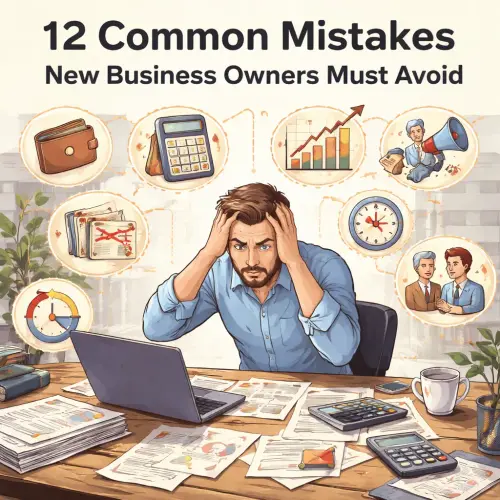
Why Understanding the Common Mistakes New Business Owners Must Avoid Matters
Starting a business is one of the most rewarding challenges you can take on. But without a clear roadmap, even the most passionate entrepreneur can stumble. The Common Mistakes New Business Owners Must Avoid aren’t just a list of warnings—they’re a guide to smarter decision-making. When you know what trips up others, you can navigate your own journey with confidence.
Many first-time founders dive in without enough preparation. They focus on the product or service while neglecting critical areas like finances, legal structure, and customer research. The results are predictable: wasted time, lost money, and sometimes total failure. This article walks you through each major mistake and shows you how to sidestep them.
What You’ll Learn in This Guide
- Why so many new businesses fail in the first year
- Concrete steps to avoid each common error
- How to build systems that support long-term growth
- Real-world examples that illustrate the risks and rewards
Mistake #1: Skipping Market Research
One of the biggest errors new entrepreneurs make is launching a product or service without validating demand. You might have a brilliant idea, but if no one wants to buy it, your business won’t survive. Market research for startups is not optional—it’s the foundation of every successful venture.
Proper research helps you understand your target audience, identify competitors, and refine your unique value proposition. Without it, you’re flying blind. Spend time conducting surveys, analyzing industry reports, and talking to potential customers before you invest heavily.
How to Do Market Research on a Budget
- Use free tools like Google Trends and AnswerThePublic to gauge interest.
- Interview 10–20 people in your target demographic.
- Study competitor reviews to learn what customers love and hate.
Remember: even a small investment in research can save you from a costly misstep.
Mistake #2: Poor Financial Planning and Cash Flow Management
Poor financial planning can cripple a new business before it gets off the ground. Many entrepreneurs underestimate startup costs, overestimate early revenue, and fail to separate personal and business finances. The result? They run out of money within months.
Poor financial planning business mistakes often stem from optimism bias—assuming everything will go perfectly. Realistic budgeting and conservative projections are your best defense. Always build a cash reserve that covers at least six months of operating expenses.
Common Cash Flow Problems in Small Businesses
Cash flow problems small businesses arise when money goes out faster than it comes in. Late-paying clients, seasonal dips, and unexpected expenses can all drain your accounts. To protect your business, invoice promptly, offer early payment discounts, and negotiate longer payment terms with vendors.
Use accounting software like QuickBooks or Xero to track every transaction. Review your cash flow statement weekly, not monthly. This habit helps you spot trends and take action before a crisis hits.
Mistake #3: Ignoring Customer Needs and Feedback
If you ignore customer needs business, you’re essentially telling the market that your opinion matters more than theirs. That’s a fast way to lose relevance. Successful companies listen obsessively to their customers and adapt accordingly.
Many new business owners create a product based on assumptions rather than real feedback. They skip user testing, dismiss complaints, and fail to iterate. This leads to poor reviews, low retention, and negative word-of-mouth.
Practical Ways to Capture Customer Insights
- Send post-purchase surveys and reward respondents with a discount.
- Monitor social media comments and online reviews.
- Set up a simple feedback form on your website.
- Conduct quarterly interviews with your most loyal customers.
Use this data to improve your product, messaging, and customer experience. Listening is free—ignoring is expensive.
Mistake #4: Pricing Mistakes That Hurt Revenue
Pricing mistakes hurt new business in two ways: pricing too low leaves money on the table and devalues your brand; pricing too high scares away early adopters. Many first-time entrepreneurs underprice because they lack confidence or fear rejection.
The key is to price based on value, not cost. Research what competitors charge and understand what your target customer is willing to pay. Test different price points through A/B testing or limited-time offers.
Remember, you can always increase prices later, but it’s harder to raise them after you’ve built a base of budget-conscious customers. Start at a sustainable price that reflects the quality you deliver.
Mistake #5: Trying to Do Everything Alone
The risks of running a business alone go beyond burnout. Solo entrepreneurs often lack diverse perspectives, struggle to scale, and miss opportunities because they’re stretched too thin. While it’s tempting to keep costs low by wearing every hat, this strategy usually backfires.
Delegation is a skill you must develop early. Outsource tasks that aren’t in your zone of genius—bookkeeping, graphic design, social media management. Hire freelancers, use virtual assistants, or bring on part-time staff as revenue allows.
Building a strong network of mentors, advisors, and peers also reduces the loneliness of entrepreneurship. Join local business groups or online communities where you can share challenges and solutions.
Mistake #6: Neglecting to Write a Solid Business Plan
The importance of business plan cannot be overstated. A business plan serves as your roadmap—it outlines your goals, strategies, target market, financial projections, and operational plan. Skipping this step is like driving cross-country without a GPS.
Many new owners view business plans as something only banks require. In reality, the process of writing one forces you to think critically about every aspect of your venture. It helps you identify risks, allocate resources, and measure progress.
You don’t need a 50-page document. Start with a one-page lean plan that covers your value proposition, customer segments, revenue streams, cost structure, and key metrics. Update it as you learn more.
Mistake #7: Legal Mistakes That Create Big Problems
Legal mistakes new business owners make can haunt them for years. Failing to register the right business structure, skipping contracts, ignoring licenses and permits, and not protecting intellectual property are common errors.
Operating as a sole proprietorship may seem simple, but it puts your personal assets at risk. Forming an LLC or corporation provides liability protection. Likewise, having written agreements with co-founders, employees, and vendors prevents misunderstandings and disputes.
Consult a business attorney early. They can help you with copyrights, trademarks, privacy policies, and compliance with industry regulations. A small upfront investment in legal guidance can save you thousands in litigation later.
Mistake #8: Weak Branding and Marketing
Poor marketing affect business growth in every way—fewer leads, low brand awareness, and weak customer loyalty. Some new owners spend almost nothing on marketing, assuming that word-of-mouth will carry them. Others spread themselves across too many channels without a strategy.
Effective marketing starts with clarity: who are you talking to, and what message will resonate with them? Build a simple marketing plan that includes a mix of content marketing, social media, email outreach, and paid ads if budget allows.
Your brand is more than a logo. It’s the feeling people get when they interact with your business. Invest in consistent visuals, a professional website, and messaging that communicates your values. Poor marketing affect business growth because it fails to connect emotionally with the audience.
Mistake #9: Scaling Far Too Quickly
Startups fail to scale properly when they grow faster than their systems, team, or cash flow can support. The excitement of early success often leads entrepreneurs to hire aggressively, expand product lines, or enter new markets prematurely.
Scaling too quickly can dilute quality, frustrate customers, and burn out your team. Instead of racing to grow, focus on building repeatable processes. Can you consistently deliver excellent service before adding more customers? Do you have enough cash to sustain growth for the next 12 months?
A good rule of thumb is to grow only when current operations are stable and profitable. Use metrics like customer acquisition cost and lifetime value to guide your decisions. Patience now pays off later.
Mistake #10: Not Tracking Key Performance Indicators
You can’t improve what you don’t measure. Many new business owners rely on gut feelings rather than data. They don’t track sales conversion rates, website traffic, customer acquisition costs, or profit margins. This makes it nearly impossible to identify problems or opportunities.
Set up simple dashboards using tools like Google Analytics, ProfitWell, or a spreadsheet. Pick 5–10 metrics that matter most to your business and review them weekly. Over time, you’ll see patterns that help you make smarter decisions.
When you track performance, you can quickly spot when something goes off course and adjust before small issues become major crises.
Mistake #11: Failing to Build a Strong Team Culture Early
Even if you’re a solo founder now, you’ll eventually hire others. The habits you establish early become your company culture. Ignoring culture leads to high turnover, low morale, and misalignment with your vision.
Define your core values from the start. Hire people who share those values, not just those with the right skills. Communicate openly, provide feedback regularly, and celebrate wins—even small ones.
A strong culture attracts better talent and creates a loyal team that goes the extra mile for your customers. Don’t leave culture to chance; build it intentionally from day one.
Mistake #12: Underestimating the Power of Resilience and Adaptability
The biggest mistake new entrepreneurs make is giving up too soon. Entrepreneurship is a rollercoaster—full of highs and lows. Obstacles will arise: a product launch that flops, a key employee who leaves, a market shift that changes everything.
Resilience is the ability to bounce back and learn from failure. Adaptability is the willingness to pivot when circumstances demand it. The most successful founders view setbacks as feedback, not final judgments.
Build a support system of mentors, peers, and family who encourage you. Take care of your physical and mental health. And remember: every expert was once a beginner who refused to quit.
Useful Resources
For deeper guidance on avoid startup failure, explore these trusted sources:
- SBA Guide to Market Research – Official government resource for understanding your market and competitors.
- SCORE Mentoring for Small Businesses – Free mentorship and templates for business planning, financial forecasting, and legal compliance.
Building a business is a journey filled with lessons. By understanding and avoiding the Common Mistakes New Business Owners Must Avoid, you give yourself a powerful advantage. Stay curious, stay humble, and keep moving forward—one smart decision at a time.
Frequently Asked Questions About Common Mistakes New Business Owners Must Avoid
What are 12 common mistakes new business owners must avoid ?
The Common Mistakes New Business Owners Must Avoid include skipping market research, poor financial planning, ignoring customer needs, pricing errors, doing everything alone, lacking a business plan, making legal mistakes, weak marketing, scaling too fast, not tracking performance, neglecting team culture, and underestimating resilience.
Why do new businesses fail in the first year ?
Why do new businesses fail in the first year? Most fail due to insufficient capital, lack of market demand, poor financial management, or ignoring customer feedback. These factors compound quickly when founders operate without a clear plan.
What is the biggest mistake new entrepreneurs make ?
The biggest mistake new entrepreneurs make is not validating their idea before investing time and money. They build a product or service based on assumptions rather than real customer input.
How does poor financial planning affect a business?
Poor financial planning business leads to cash shortages, missed growth opportunities, and inability to pay bills. It often forces owners to make desperate decisions, like taking on high-interest debt or shutting down prematurely.
Why is market research important for startups?
Market research for startups is critical because it reveals customer needs, competitor strengths, and potential pricing strategies. It reduces the risk of launching a product no one wants.
What happens when a business ignores customer needs?
When you ignore customer needs business, customers leave negative reviews, stop buying, and tell others to avoid you. Your brand reputation suffers, and it becomes very expensive to regain trust.
How can pricing mistakes hurt a new business?
Pricing mistakes hurt new business by either leaving profit on the table or scaring away buyers. Low pricing can also signal poor quality, while high pricing without perceived value leads to low sales.
What are common cash flow problems in small businesses?
Cash flow problems small businesses include late customer payments, seasonal revenue dips, unexpected expenses, and overspending on inventory. Tracking inflows and outflows weekly helps prevent crises.
Why do startups fail to scale properly ?
Startups fail to scale properly when they grow too fast without stable processes, sufficient cash, or the right talent. Rapid expansion often leads to quality issues and operational chaos.
How important is having a business plan?
The importance of business plan cannot be overstated—it clarifies your goals, strategies, and financial needs. Even a one-page plan helps you stay focused and measure progress.
What legal mistakes do new business owners make?
Legal mistakes new business owners commonly make include operating without proper licenses, choosing the wrong business structure, skipping contracts, and failing to protect intellectual property. These errors create liability and legal headaches. For a related guide, see 10 Tax Mistakes Small Business Owners Often Make.
How can poor marketing affect business growth ?
Poor marketing affect business growth by limiting visibility, reducing lead generation, and weakening brand loyalty. Without a consistent marketing strategy, even great products go unnoticed.
What are the risks of running a business alone ?
The risks of running a business alone include burnout, limited perspectives, slower problem-solving, and difficulty scaling. Solo founders often miss critical insights because they have no one to challenge their assumptions.
How can beginners avoid startup failure ?
To avoid startup failure, conduct thorough market research, create a realistic budget, listen to customers, write a simple business plan, and build a support network. Focus on cash flow and avoid scaling too quickly. For a related guide, see 10 Simple Steps to Launch a Successful Business.
What are best practices for new business success ?
Best practices for new business success include validating your idea, tracking key metrics, investing in marketing, protecting your legal structure, delegating tasks, and staying adaptable. Consistency and customer focus are the real drivers.
Should I write a business plan if I’m bootstrapping?
Yes. Even bootstrapped businesses benefit from a lean plan that outlines revenue streams, costs, and growth milestones. It helps you prioritize spending and spot gaps early.
How often should I review my financial statements?
Review your profit-and-loss statement and cash flow report at least weekly during the first year. Monthly reviews are fine for stable businesses, but early on, weekly checks help you catch problems fast.
What’s the best way to gather customer feedback?
Use short post-purchase surveys, monitor social media conversations, read competitor reviews, and personally interview customers. Make it easy for them to share honest opinions.
Do I need a lawyer to start a business?
It’s wise to consult a business attorney at least once to choose the right legal structure, review contracts, and address industry-specific regulations. This small investment prevents expensive mistakes later.
How do I know when my business is ready to scale?
You’re ready to scale when you have consistent profitability, repeatable processes, strong customer demand, enough cash reserves, and a team that can handle growth. Scale slowly and monitor unit economics closely.